

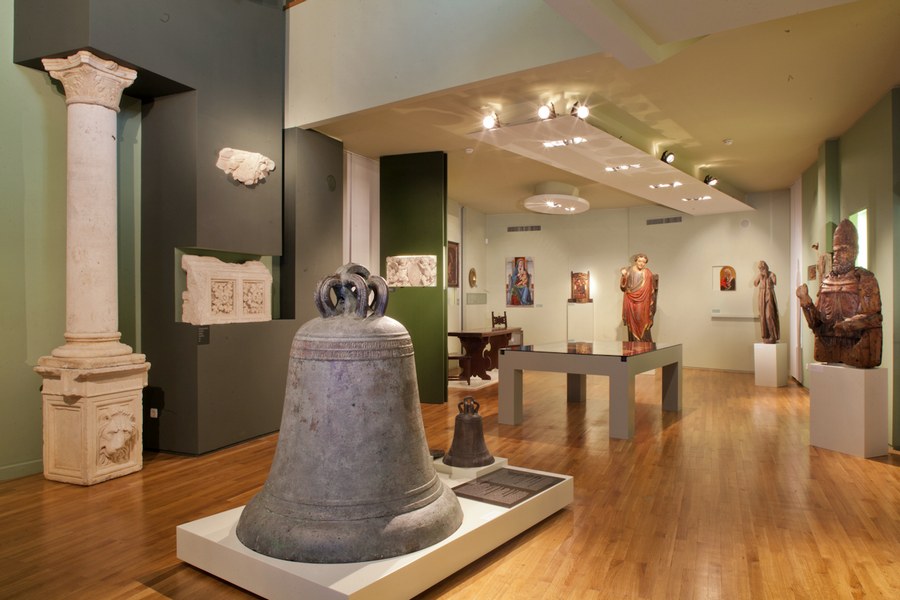
It is situated in the immediate vicinity of the Cathedral of St. James, in the former Prince's Palace, which for centuries served as the seat of the highest representative of Venetian authority in Šibenik and the center of public life.
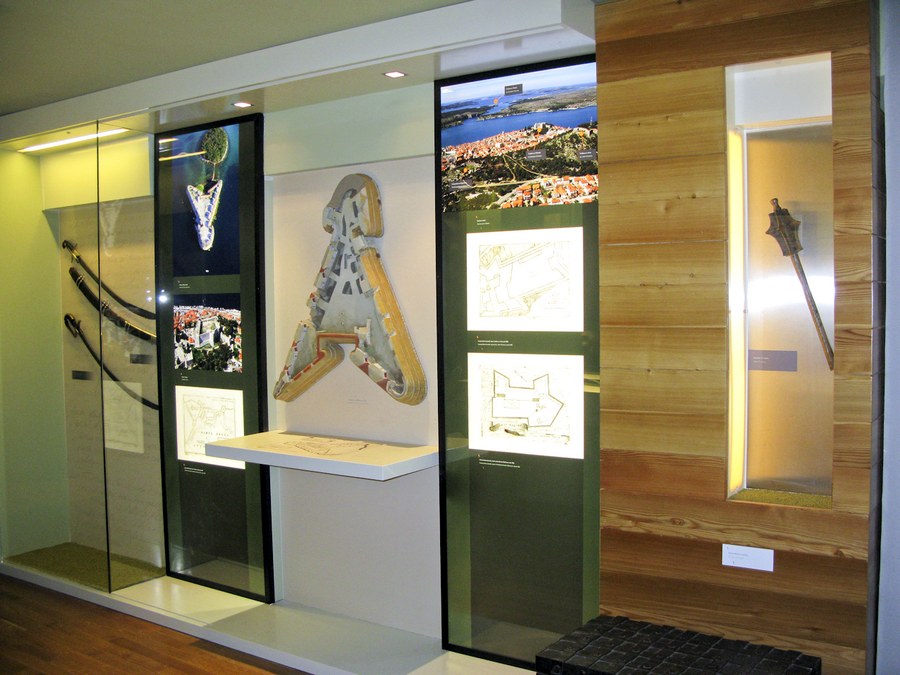
The museum's permanent exhibition is located in the atrium and the south wing of the Palace and was designed by the renowned architect Vinko Peračić. The history of Šibenik and the surrounding region, from the 6th millennium BC to the end of the 18th century, is presented in a modern and interactive way. The completion of the permanent exhibition on the top floor of the Palace, which will showcase more recent history, is expected soon.
Your tour of the permanent exhibition begins in the atrium, where a rich archaeological collection is displayed. Featuring artifacts from around fifty sites in the Šibenik area, it bears witness to a long continuity of settlement throughout prehistory, antiquity, late antiquity, and the Middle Ages. A highlight is the rich legacy of the Danilo culture, which includes the famous Danilo rhytons – ritual vessels. Interestingly, one of them was found to contain what are currently the oldest traces of cheese in the world—over 7,000 years old, significantly older even than those found in Egypt.
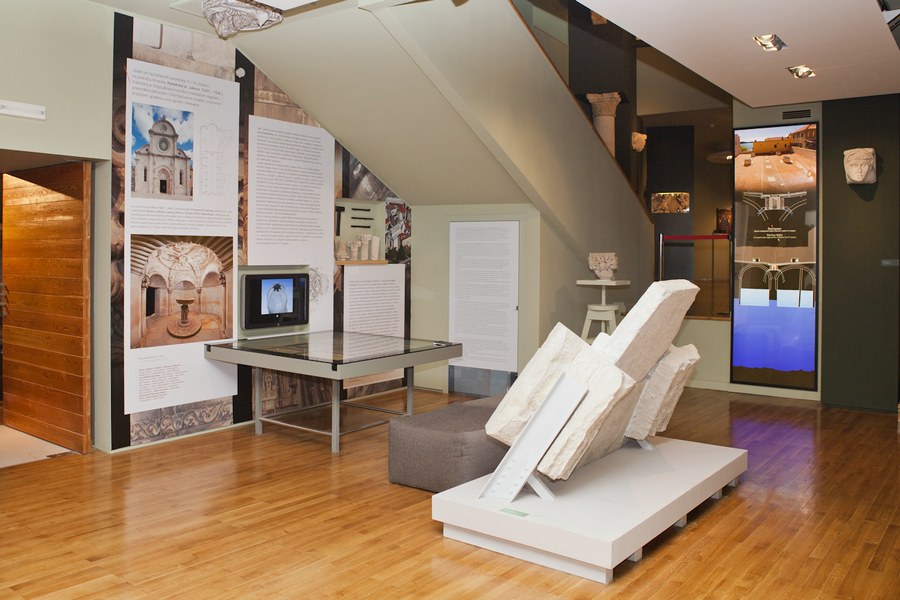
The exhibition then guides you through the most important events from the time of the Croatian kings and the Croatian-Hungarian Kingdom, followed by four centuries of Venetian rule and nearly as long a period of warfare with the Ottomans. A special section of the exhibition is dedicated to the Cathedral of St. James, where original parts of the cathedral's dome are on display. The section on the first floor dedicated to the Šibenik humanist circle is particularly interesting; its members included notable Šibenik figures such as Antun and Faust Vrančić, Martin Kolunić Rota, Božo Bonifačić, Horacije Fortezza, Juraj Šižgorić, Dinko Zavorović, Frane Divnić, and others. Throughout the exhibition, you can chronologically follow the development of art and architecture in Šibenik from the Romanesque to the Baroque period – the Šibenik City Museum is rich in valuable objects of both sacred and secular art.


