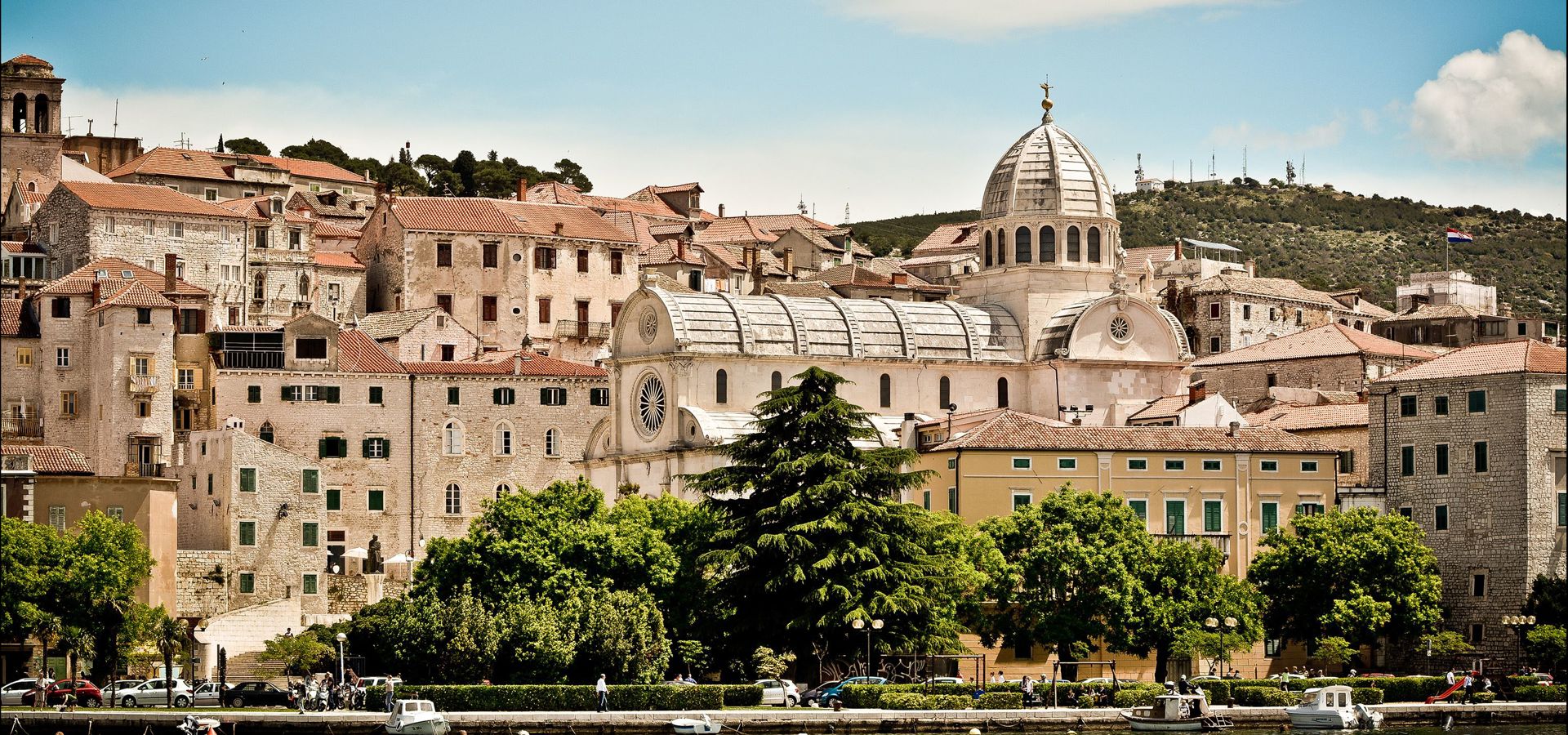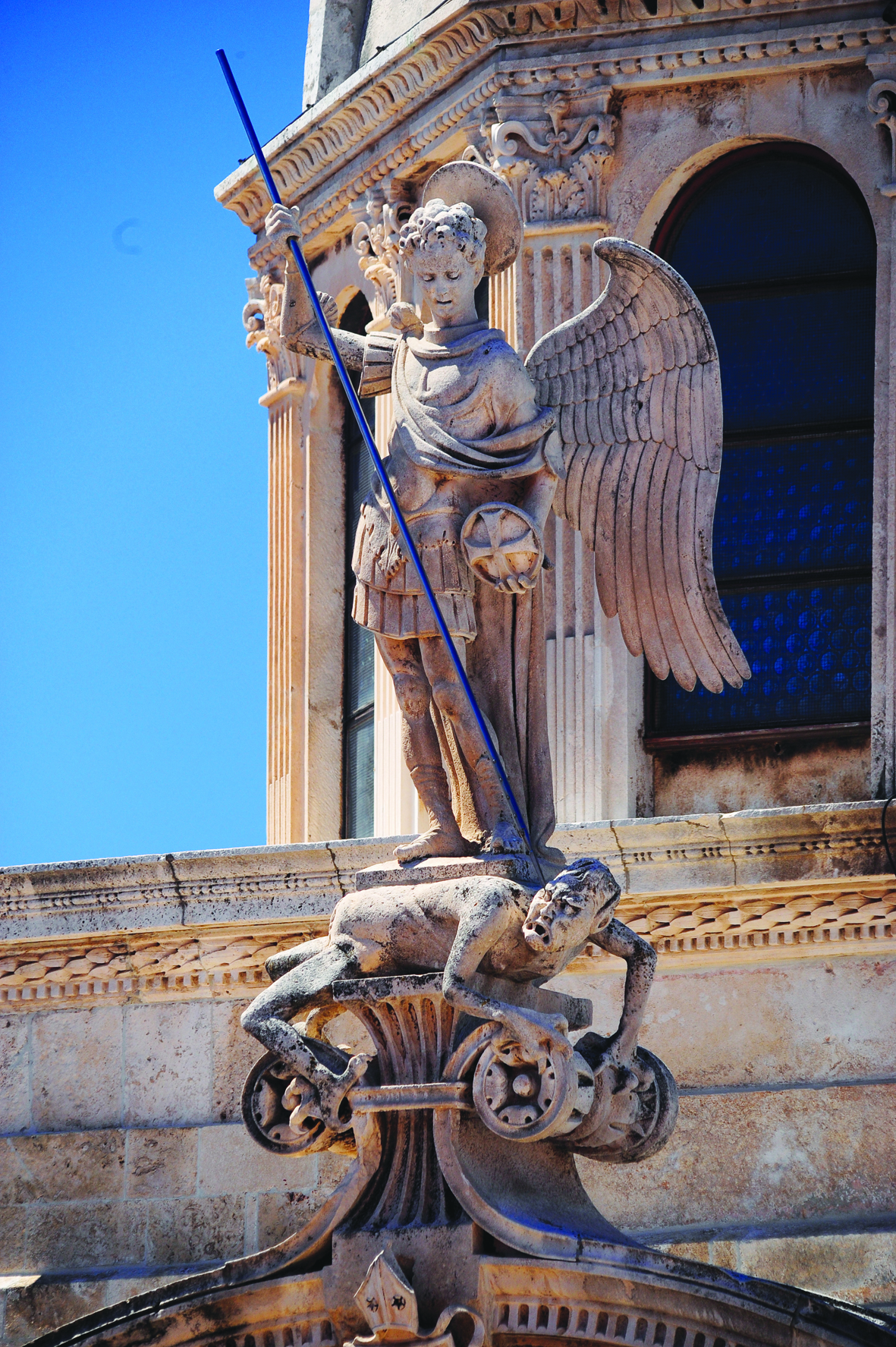
Precisely because of this unique technique and the use of stone as the sole material, the cathedral's outer contours correspond to its inner ones: the facade, roof, and dome are not merely facades but reflect what lies behind or beneath them. The shapes you see from the outside can also be seen once you step inside and look up. In this way, the cathedral leaves the impression of a giant stone shell you have stepped into, or a massive, overturned ship imbued with the silence and dignity of a sacred space.
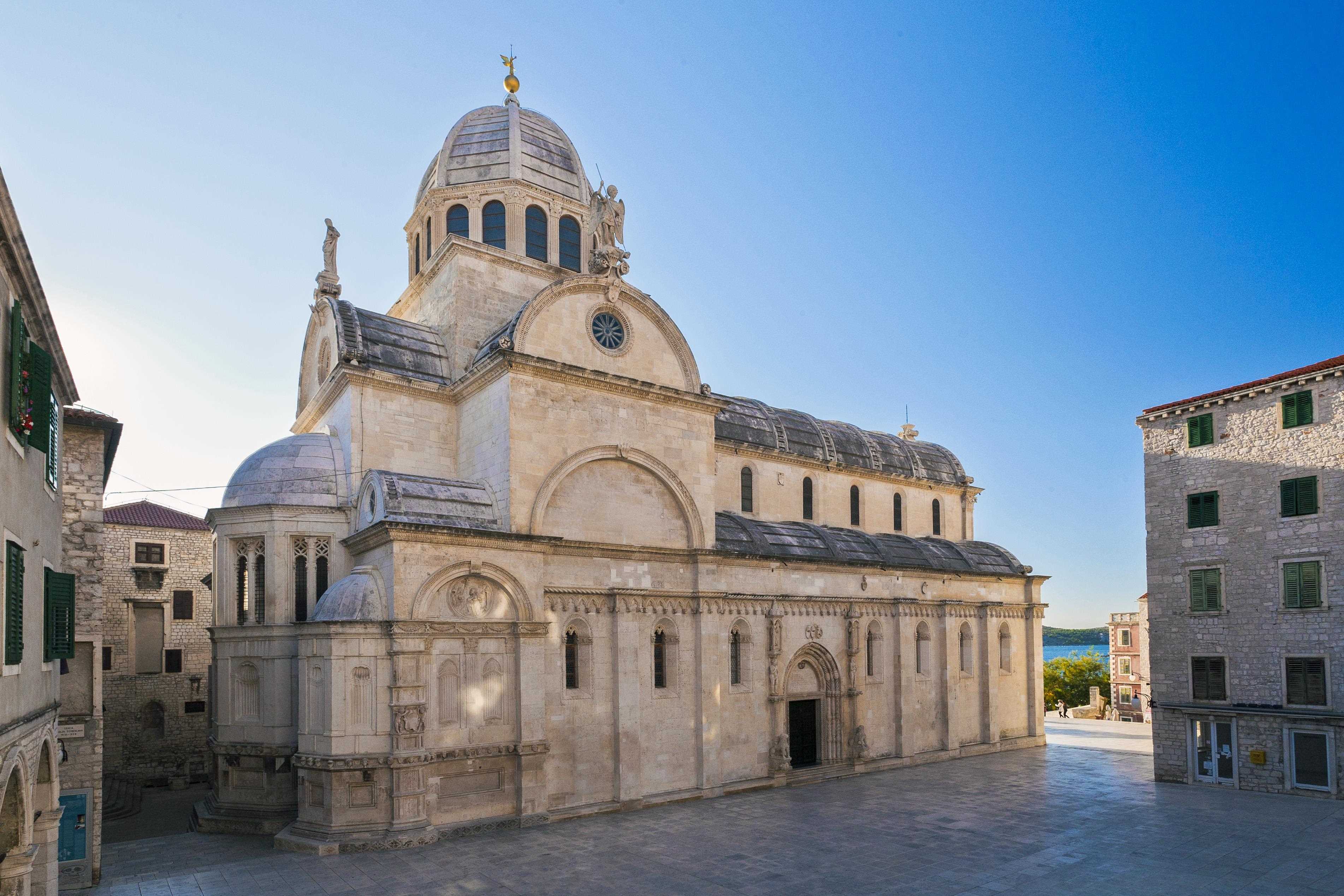
St. James's Cathedral owes its beauty to a unique blend of Gothic and Renaissance styles. Because the cathedral took 105 years to build, these two styles merged naturally. Stone, as the only material used, is responsible for the unity of the cathedral as a whole, so it is fair to say that in the Šibenik cathedral, stone united the styles. It is also the place where the Renaissance first appeared in Croatia, again thanks to Juraj Dalmatinac.
Juraj decorated the interior and exterior of the cathedral with a frieze of 71 human heads and 3 lion heads, as well as a baptistery located in the very bowels of the cathedral—two unique features you absolutely must see. The frieze of human heads and the baptistery are embodiments of humanist ideas.
The frieze of heads is a gallery of original and distinct portraits of people from Juraj's time, mostly men, along with a few women and children. Beyond the superb craftsmanship, it embodies the spirit of the Renaissance. Man as the measure of all things is placed upon a sacred building. Juraj's heads are not saints looking down from above; through their humanity and their placement at eye level, they are our equals.
The baptistery represents the very essence of Juraj's work. In a small, very intimate space, he virtuously weaves Gothic lace with Renaissance sculpture. By placing a depiction of only two of the Holy Trinity—God the Father and the dove of the Holy Spirit—above the baptismal font, he makes every child just baptized in the font a Son of God. Is there a more powerful message of humanism than this?
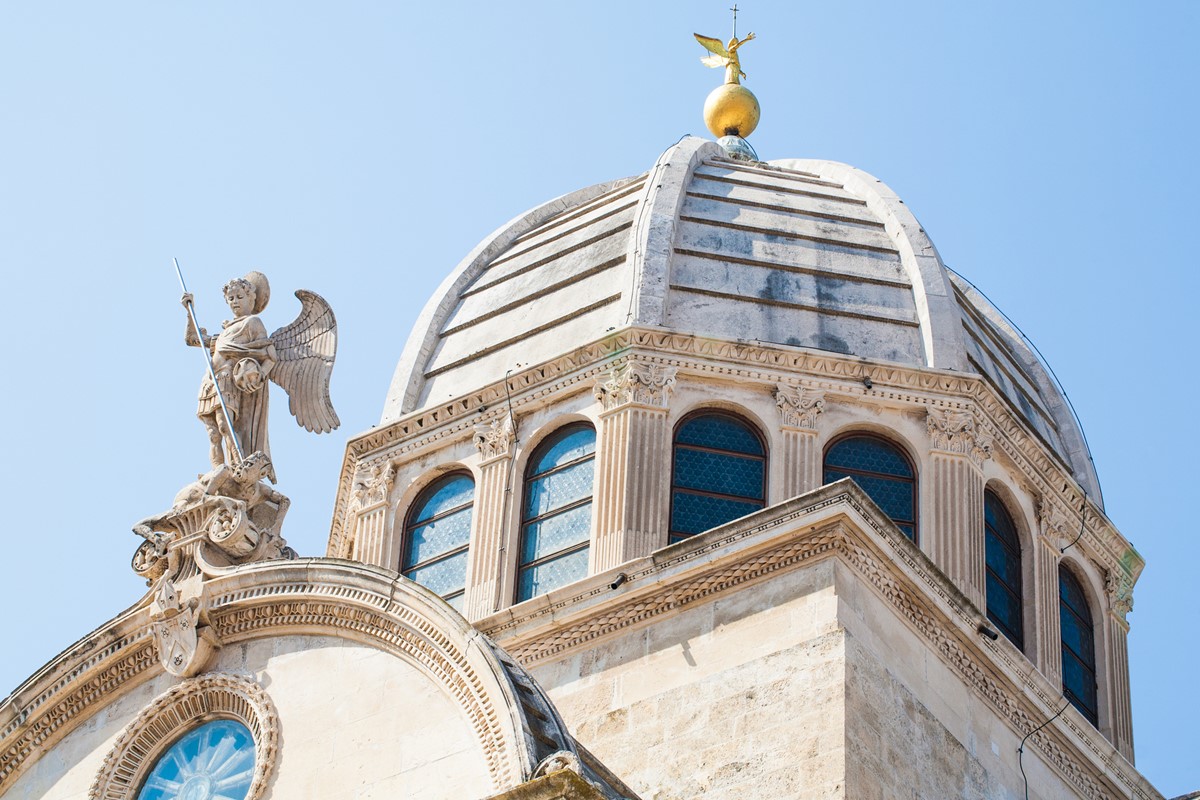
Even today, after five centuries, it never ceases to fascinate the residents of Šibenik who pass by it every day, so you will not remain indifferent either. Regardless of which side you approach it from, you will enjoy both the richness of its details and the uniqueness of its geometric perfection.
When visiting, remember that the cathedral is also the living heart of the community. It is a place of worship, prayer, and silence, so please ensure you are dressed appropriately and remain quiet. Weddings are regularly held in the cathedral, which is a spectacle in itself after the ceremony in front of the building, and children are still baptized in Juraj's baptistery today.
The cathedral also features its own interpretation center, Civitas Sacra, located just a 3-minute walk away, where you can learn more about the secrets of its construction and enjoy works of sacred art.