

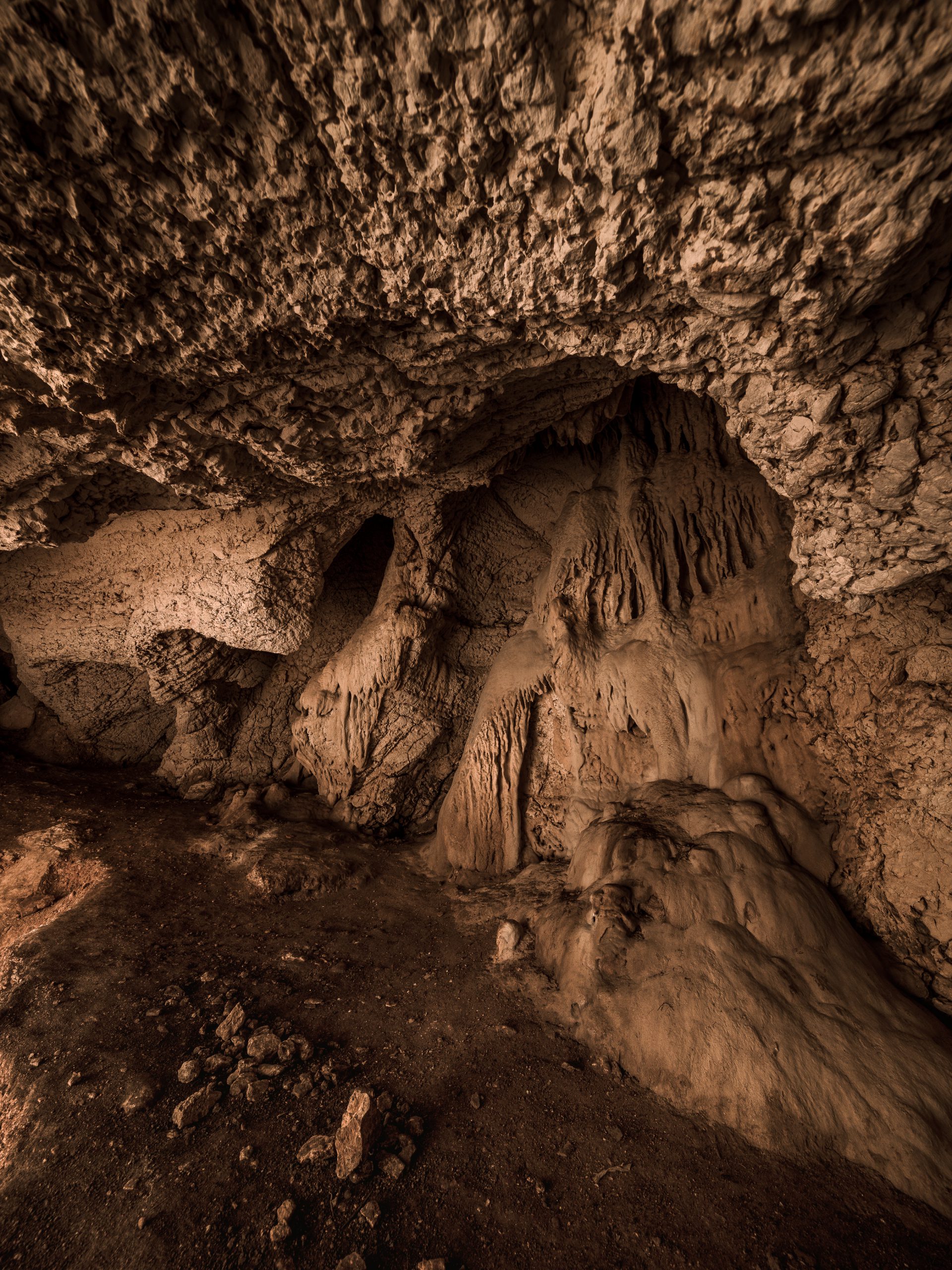
Located on the left bank of the Krka River, in the area of Bogatići Miljevački, Oziđana Cave stands proudly at an altitude of 220 meters, high above the steep canyon cliffs. Its southwest-facing entrance offers visitors a spectacular view of the deep river canyon, where the Krka River spreads into beautiful cascades known as the Ogrlice. This impressive location, the final stop on the Stinice – Roški Slap – Oziđana Cave educational trail, has attracted attention for centuries and gets its name from the characteristic dry-stone wall at the entrance, which testifies to ancient human intervention.
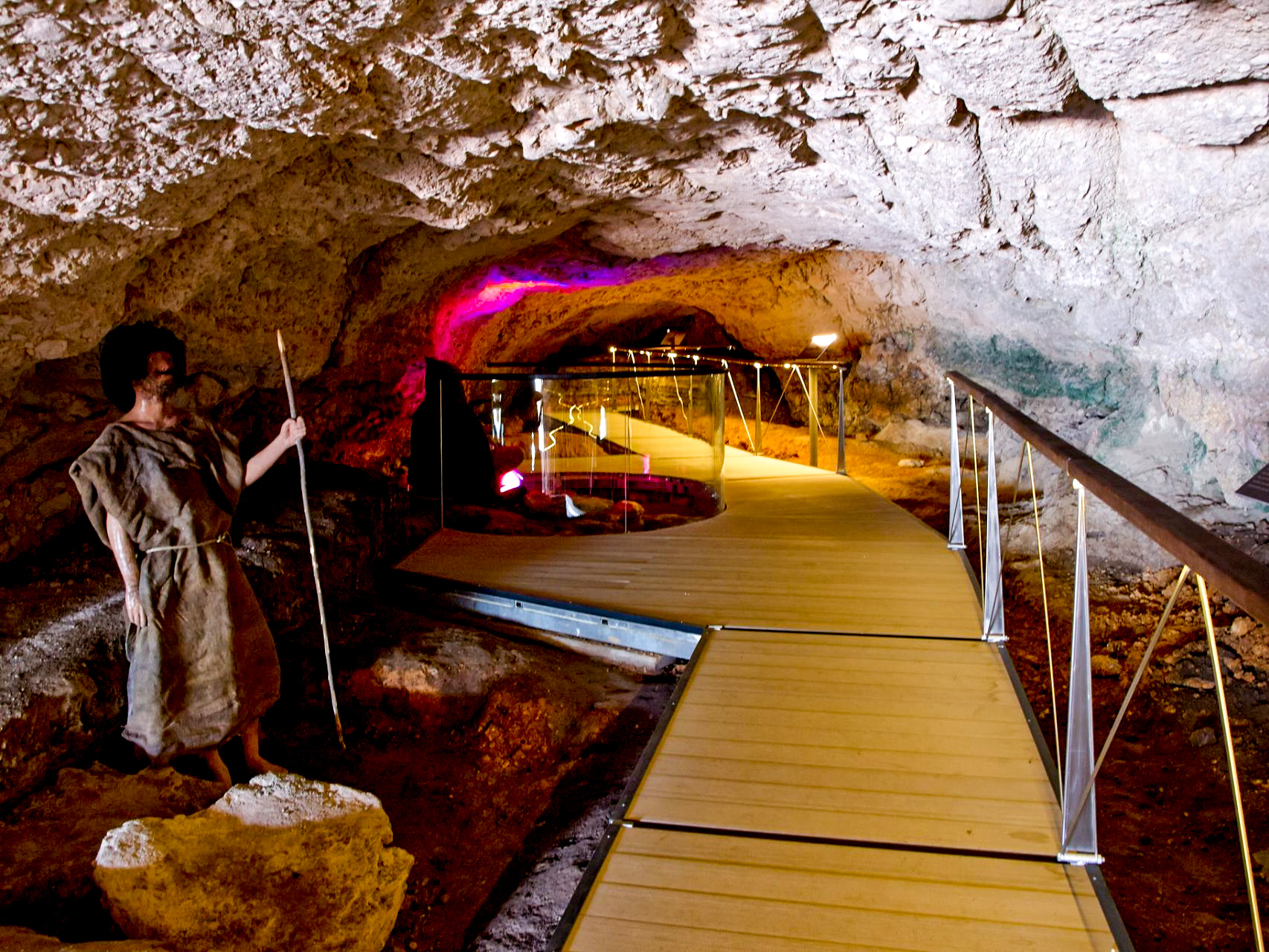
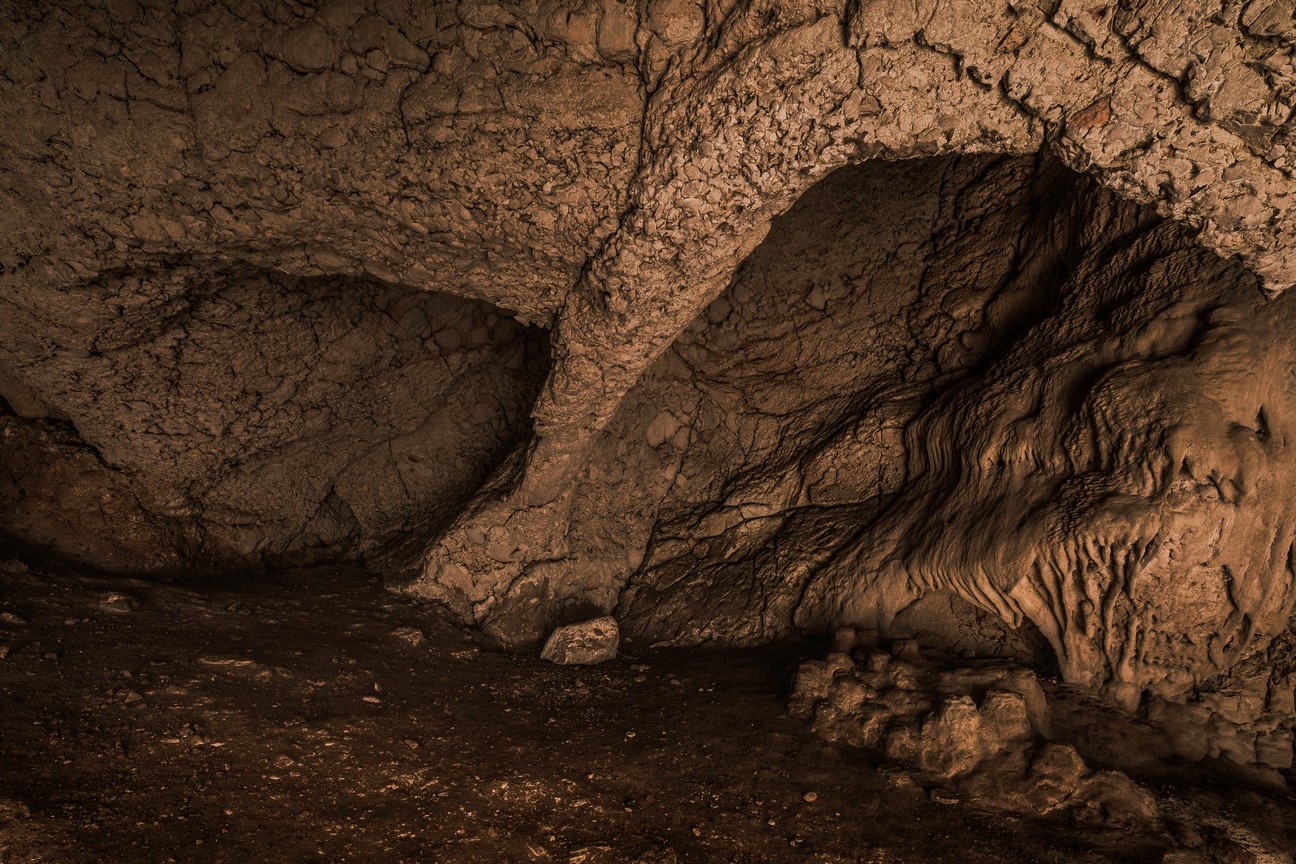
Geologically speaking, Oziđana Cave is a medium-sized site with a simple morphology. Its tunnel-like shape, formed in conglomerate layers with two natural "chimneys" in the rear, makes it a fascinating natural phenomenon. However, its true value lies in the archaeological wealth hidden within its walls. Archaeological research has revealed continuous human presence from the Early Neolithic, around 6000 BC, up to 1500 BC, ranking Oziđana Cave among the most important prehistoric sites in the region.
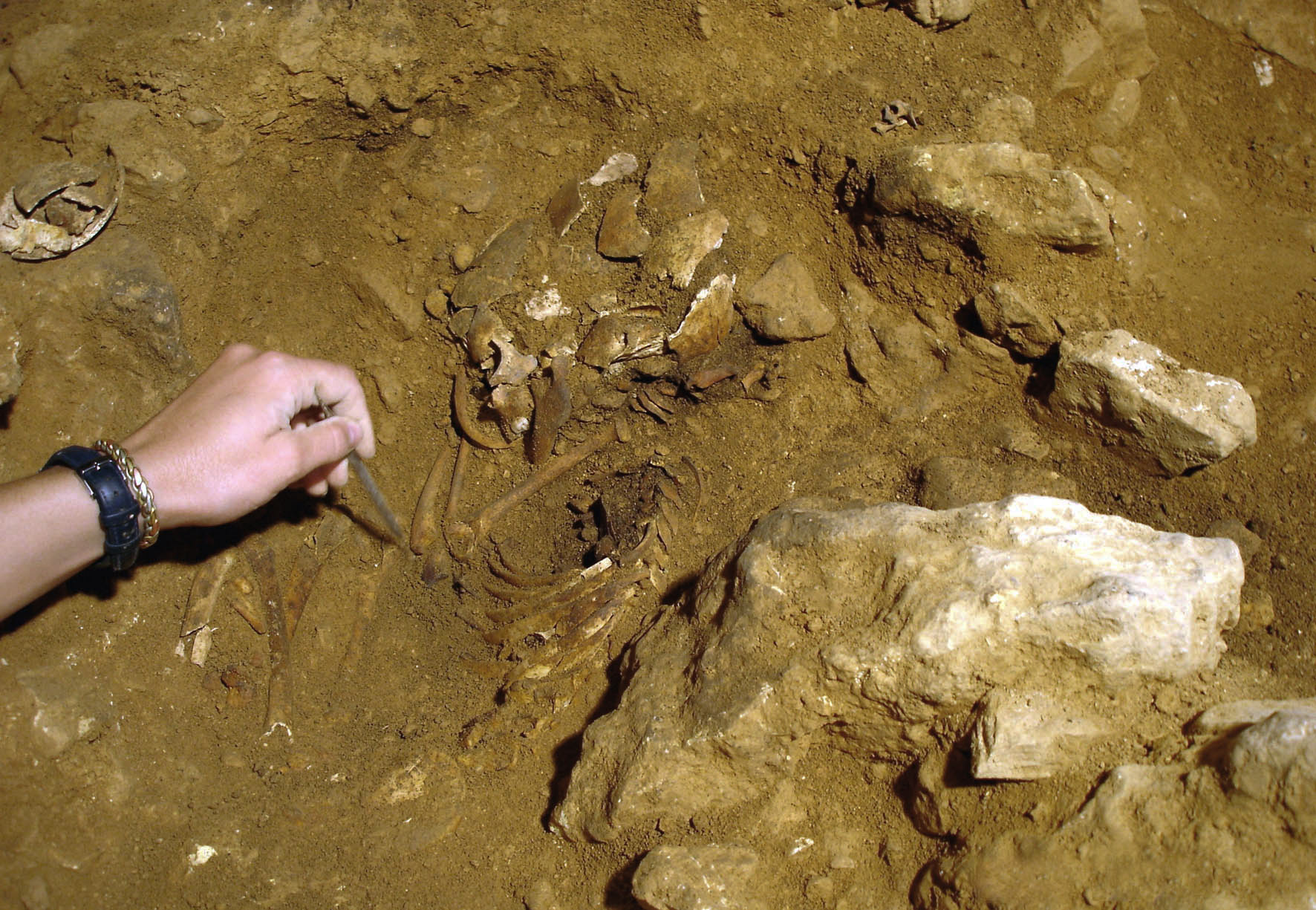
In the central part of the cave, a hearth was found—an eternal symbol of home and the center of life for prehistoric communities. The most important daily activities took place around it, and its presence testifies to long-term human habitation. Particularly significant are the remains of two children's skeletons, carefully placed in a grave in a contracted, fetal position, which points to complex burial rituals. These Neolithic burials represent a rare testament to spiritual life in the Stone Age in the Eastern Adriatic region. It is believed that such burials within settlements were part of a religious ritual aimed at protecting the community and ensuring prosperity, linked to the "cult of the dead" and the cult of fertility, both crucial for the survival of prehistoric humans.
In addition to burials, Oziđana Cave is rich in numerous fragments of ceramic vessels, which clearly outline the presence of all Neolithic cultures of the Adriatic area: Impresso (c. 6000 – 4500 BC), Danilo (c. 4500 – 3900 BC), and Hvar culture (c. 3900 – 3300 BC). Later findings include traces of the Eneolithic (c. 3500 – 2200 BC), the Early Bronze Age (c. 2200 – 1600 BC), and the Middle Bronze Age (c. 1600 – 1550 BC). Other important discoveries include flint artifacts such as blades, stone tools like hand mills, bones of various animals (sheep, deer, wild cat), and fragments of mussel shells. All these findings together tell the story of the rich and diverse life that took place in Oziđana Cave, making it an invaluable source of knowledge about our distant past.


