

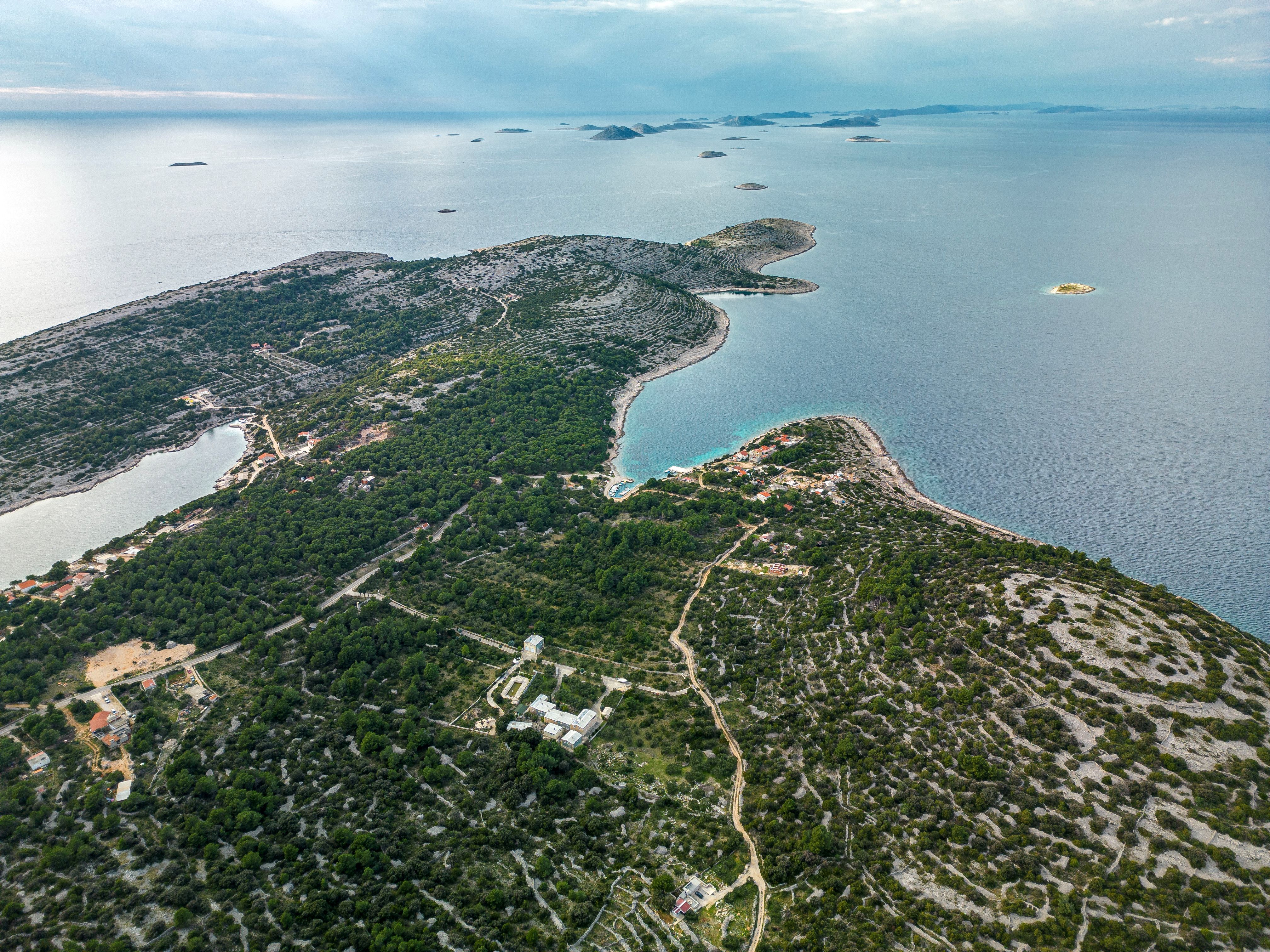
Between the open sea and the other islands of the Šibenik archipelago, just before the southern entrance to the Kornati, lies Žirje—a sturdy sentinel. Because of its exposed position, it has been a key strategic point since ancient times. This is evidenced by the remains of 6th-century Byzantine fortifications: the never-completed Gustirna above Mala Stupica cove, which was intended to control the internal shipping route between the islands of the Šibenik archipelago, and Gradina above Velika Stupica, known locally as Teuta's Walls, which monitored traffic on the open sea. While walking or cycling along Žirje's well-developed network of trails, in addition to these fortresses, you can visit more modern military sites, most notably Zvizdulje—an artillery battery that played a decisive role in the defense of Šibenik during the 1991 Homeland War.
Isolation, along with the long-term military presence on Žirje, has helped preserve the island's authenticity, character, and natural beauty, which are often threatened by tourism elsewhere. Beyond its untouched nature, Žirje boasts a rich heritage of dry-stone walls, the most prominent example being the Stari Stan complex in the Samograd area, which is protected as a cultural asset.
An island with an area of 15 km2 is so indented that its coastline is nearly forty kilometers long, featuring no fewer than 29 coves. Regardless of which wind is blowing, Žirje always offers shelter to sailors, and the island has several taverns serving traditional and fresh food that mostly comes straight from one of the richest fishing grounds in the Adriatic – the Žirje waters.
Although the origin of the island's name dates back to antiquity, it is widely believed that it was named after the acorn (žir), the fruit of the holm oak that once dominated the island's flora. Today, in addition to fragrant Mediterranean maquis, you can see fields, olive groves, and vineyards on Žirje, while one fruit holds a special place – the Žirje plum – an almost indigenous variety of green plum that is, unfortunately, becoming increasingly rare.
The diversity of the Žirje landscape offers various opportunities for visitors, whether they are day-trippers, sailors, swimmers, or cyclists, and the island is also home to eight natural caves and pits. The Mediterranean way of life is visible at every turn, reaching its peak in the summer through the traditional event Island Games which feature various sports competitions, the most popular being bocce, tug-of-war, and tournaments in briškula and trešeta – popular card games.
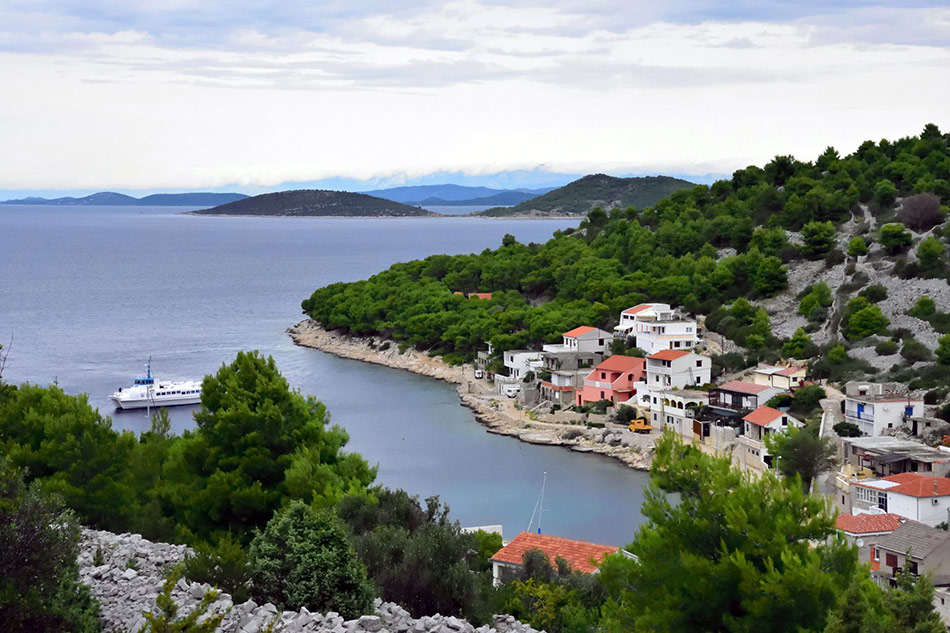
The main island port is Muna Bay, where the regular ferry line from Šibenik docks, making the island an accessible nautical destination even for those who cannot arrive by sailboat or motorboat. Since cars are used on Žirje due to its size and scattered settlements—unlike other islands in the archipelago—the island is also connected by a ferry line. And if you have already spent part of your vacation on Žirje, we recommend taking the same boat line to nearby Kaprije.


