

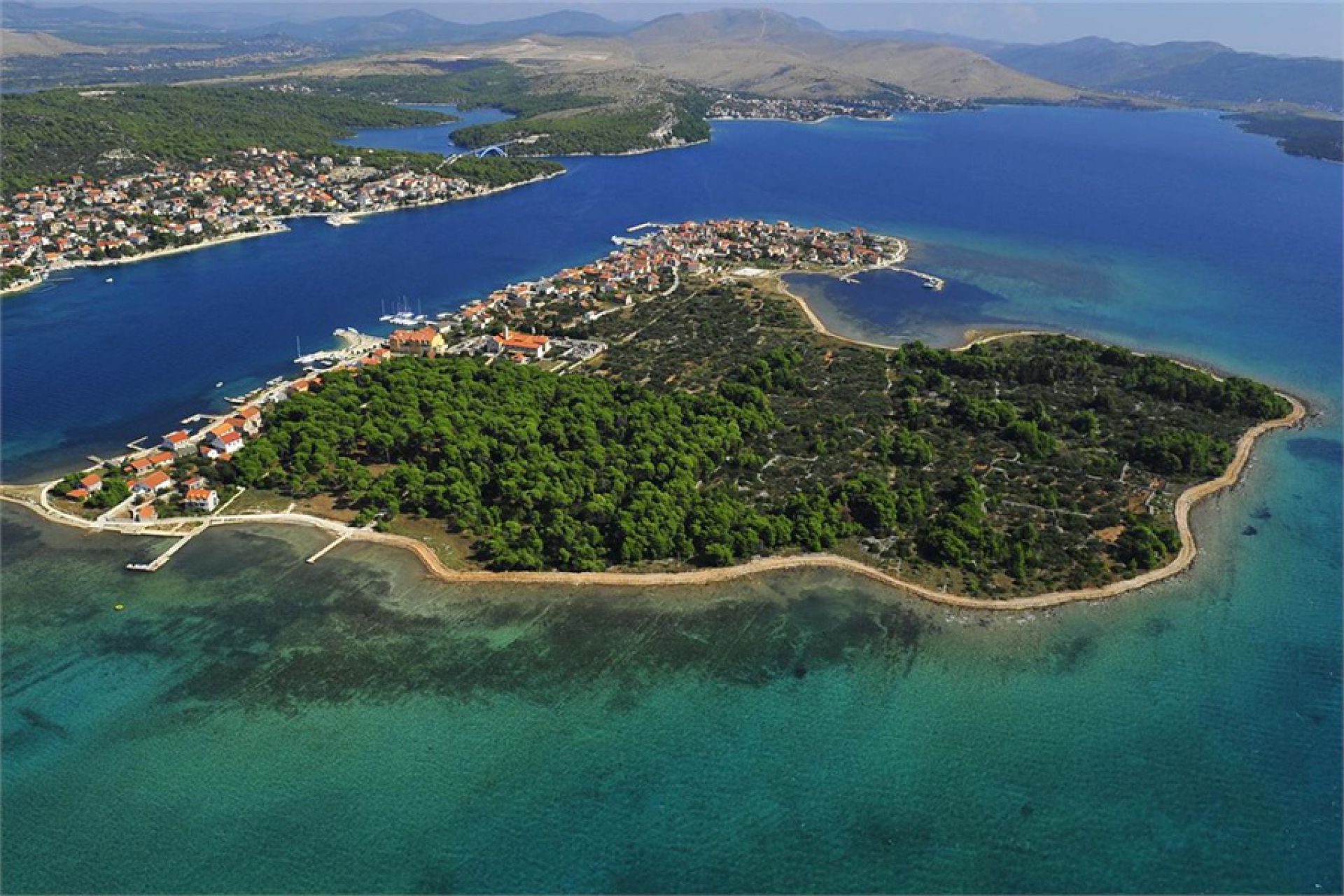
Known as the lowest inhabited island in the Mediterranean, it is also one of the smallest – its elevation does not exceed 1.25 meters, and its surface area is only 0.36 km2. Within this compact space, in a village home to about 170 residents today, you will find the Franciscan Monastery of the Holy Cross with its church and museum, the 16th-century St. Lawrence olive mill, the Spongiola Hotel with its small diving museum, and two galleries dedicated to sponges and Krapanj’s sponge-diving heritage.
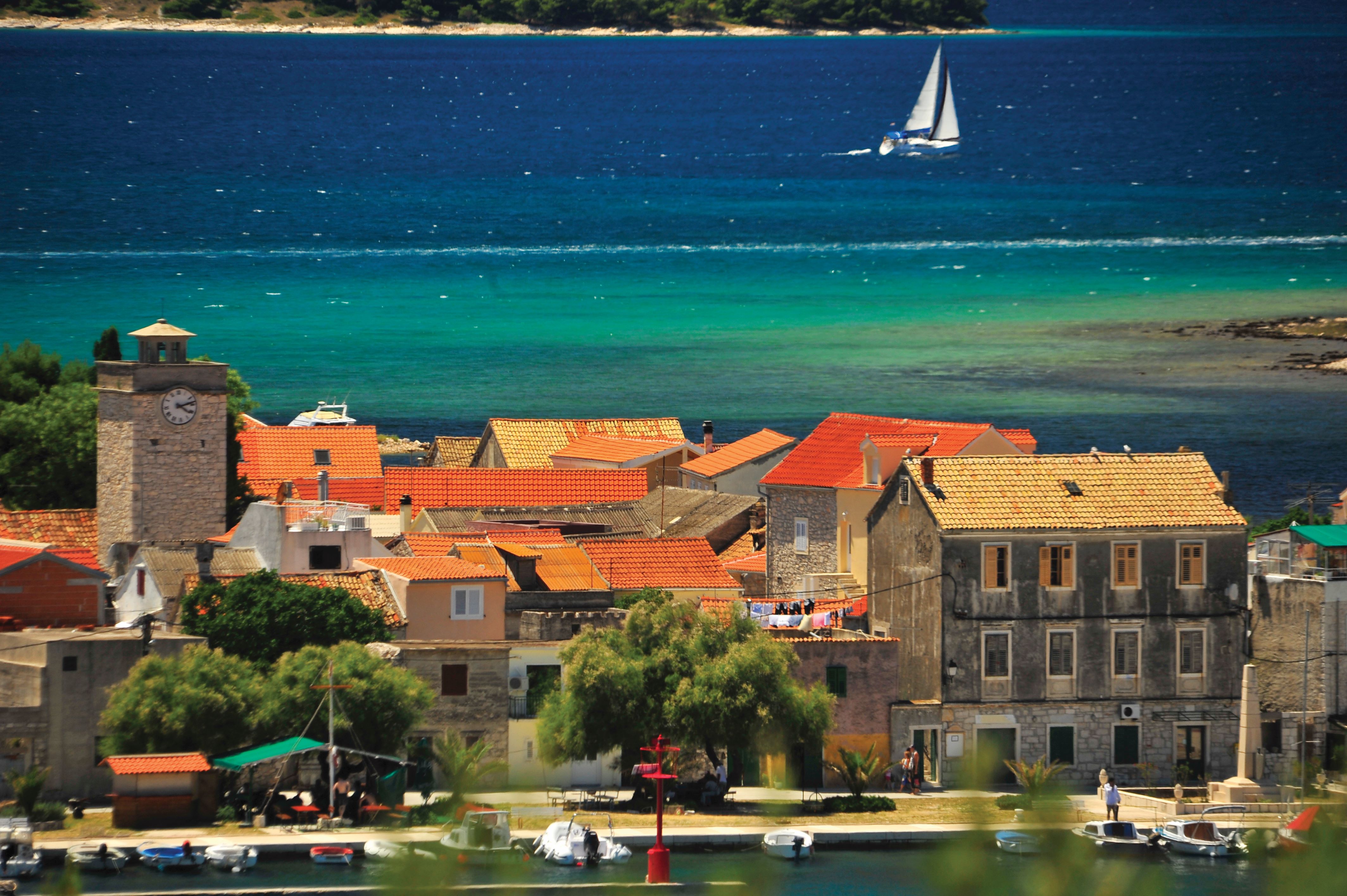
The Krapanj sponge-diving story began in the 17th century when a friar named Antun arrived at the local monastery from Crete and taught the islanders how to harvest and process sponges. A major leap forward came in the 19th century with the introduction of the first professional diving equipment, weighing over 100 kilograms, which you can also see on display on the island. Krapanj’s sponge hunters – spuge – as they are called here, are not a thing of the past, but a living, breathing tradition. Take this unique opportunity to listen to their stories between walks around the island and swims in the clear sea, and bring home a sponge as a souvenir, which can be found and purchased at every turn.
There are several taverns on Krapanj where you can find refreshments after exploring the island, and a regular boat line runs between Krapanj and Brodarica every hour. After enjoying the charms of the island of sponges, we suggest you extend your island-hopping experience by visiting other islands in the Šibenik archipelago.


