

In the heat of the Roman civil wars, following Caesar's victory at Pharsalus, Illyricum became the scene of significant military operations. In 48 BC, Caesar sent his legate Aulus Gabinius with reinforcements, whose path led to Burnista on the Krka River, a strategically important crossing point toward the hostile Delmatae. Although Gabinius's army suffered a heavy defeat at the hands of the Delmatae, this event highlighted Burnum's importance as a potential military stronghold. Half a century later, Augustus proudly boasted of the return of the legionary standards from the Delmatae, which he achieved during his military operations from 35 to 33 BC. Burnum then served as a key base from which Octavian launched his war against the Delmatae, extending the Roman province of Illyricum deep into the continental interior and opening land communication between the western and eastern provinces of the Empire.
Peace in the province of Illyricum, later known as Dalmatia, was not to last. From 6 to 9 AD, a massive war known as the Bellum Batonianum broke out, causing panic in Rome. Augustus engaged fifteen legions and auxiliary units, and his best generals distinguished themselves in the field, including the future emperor Tiberius. After suppressing the rebellion, Rome secured peace by establishing a system of fortifications, including two legionary camps – Burnum and Tilurium – and a network of military roads. These garrisons, with some fifteen thousand soldiers, were reinforced by the systematic settlement of veterans in fertile, depopulated areas, which systematically eliminated the layer of young, rebellious people and prevented the possibility of further uprisings.
.jpeg)
On the right bank of the Krka River, opposite the indigenous settlement of Burnista on the Puljane hillfort, a permanent stone legionary camp was built. During the first century, the Burnum agglomeration had a population of fifteen to twenty thousand, including soldiers, veterans, the indigenous population, and settlers, making it the largest settlement in Roman Liburnia. The army was a true melting pot, attracting people from all over the Roman world – from the Celtic regions of northern Italy to Gaul, Macedonia, Syria, and the Alpine regions. The soldiers' wives and children, as well as merchants and craftsmen of all trades, came in search of business opportunities, creating a dynamic society. The Krka River, rich in fish and suitable for building watermills and fulling mills, provided veterans with additional opportunities for livelihood and craft activities, as confirmed by the tombstones found in the canyon.
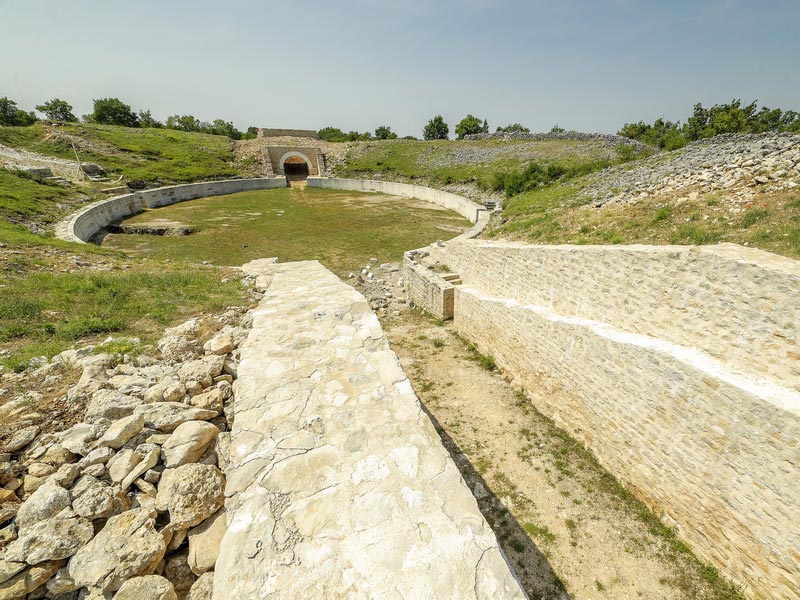
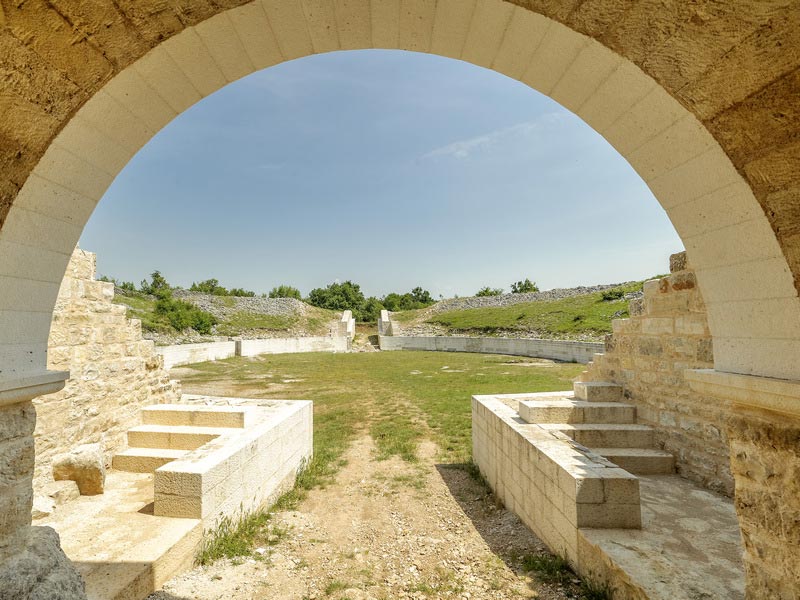
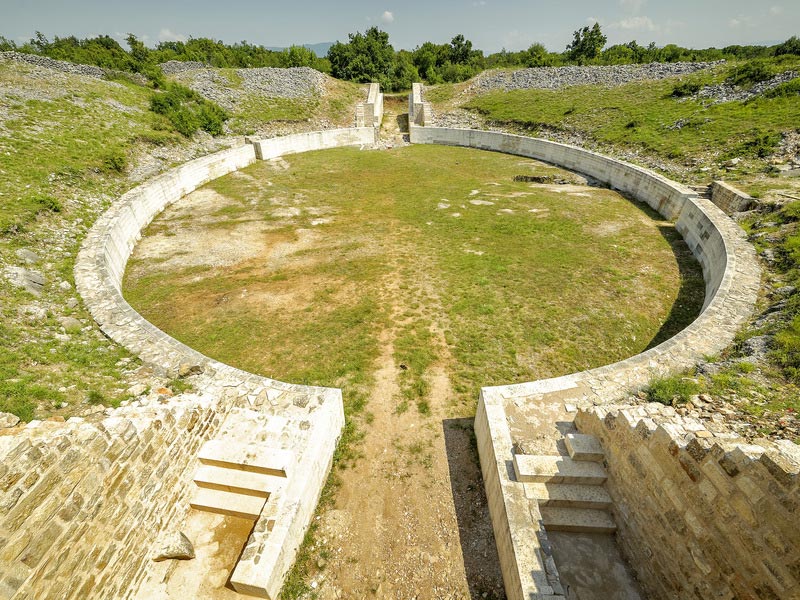
Archaeological research in Burnum has revealed a wealth of material evidence testifying to its importance. After Caligula's assassination, Emperor Claudius came to power in 41 AD and, grateful for the loyalty of the XI and VII legions during Scribonianus's rebellion, granted them the honorary title Claudia pia fidelis. Claudius invested significant funds in changing the urban physiognomy of Burnum, as evidenced by fragmentary inscriptions regarding the renovation of the headquarters building (principia) and the construction of the amphitheater. Findings of XI legion seals with the mark CPF on roof tiles indicate a construction phase of the military training ground (campus) from that time. Later, after Nero's suicide in 68 AD and the subsequent civil war, Emperor Vespasian sent the IV legion (IIII Flavia felix) to Burnum, which further confirms the strategic importance of this site for the Roman Empire.


