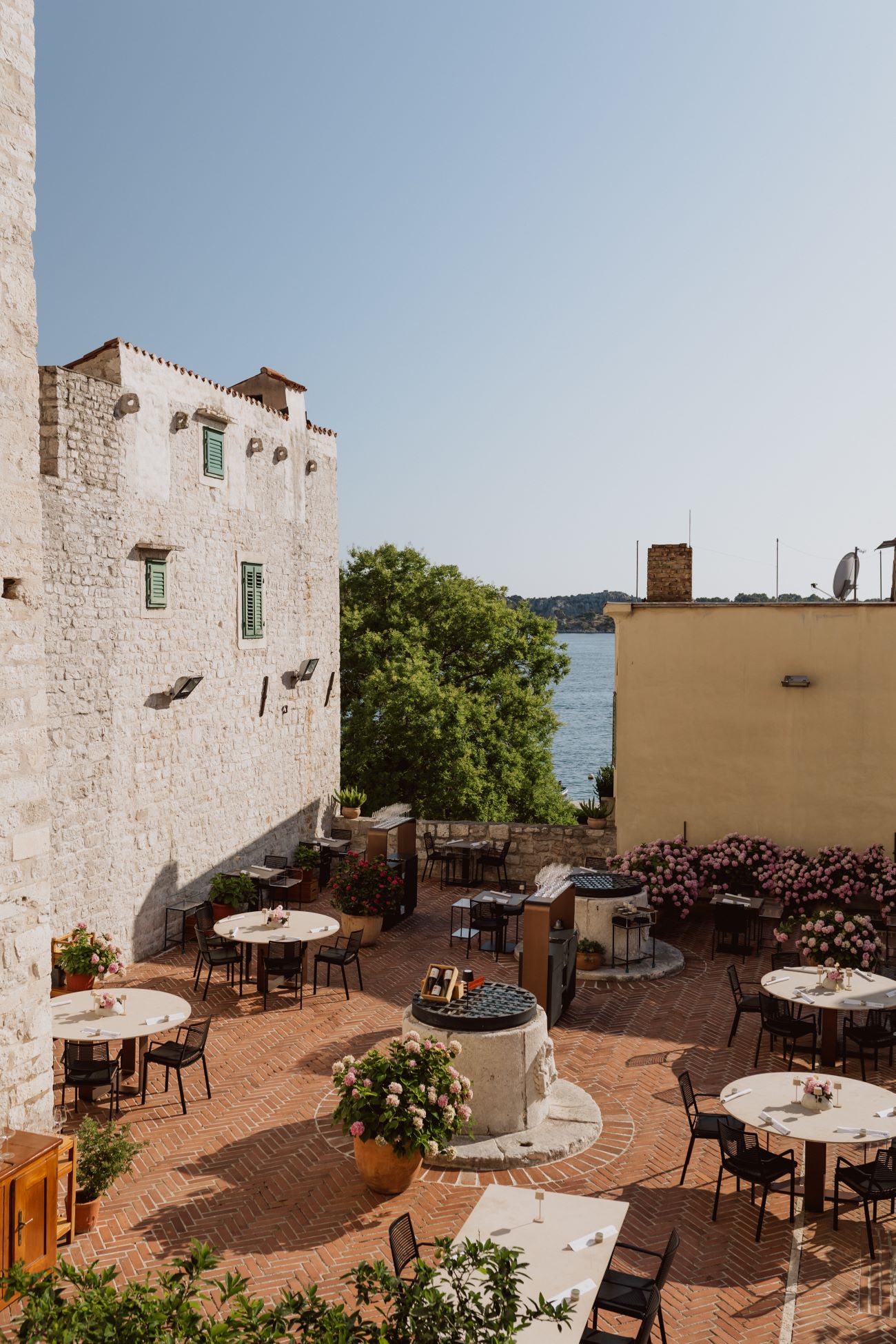
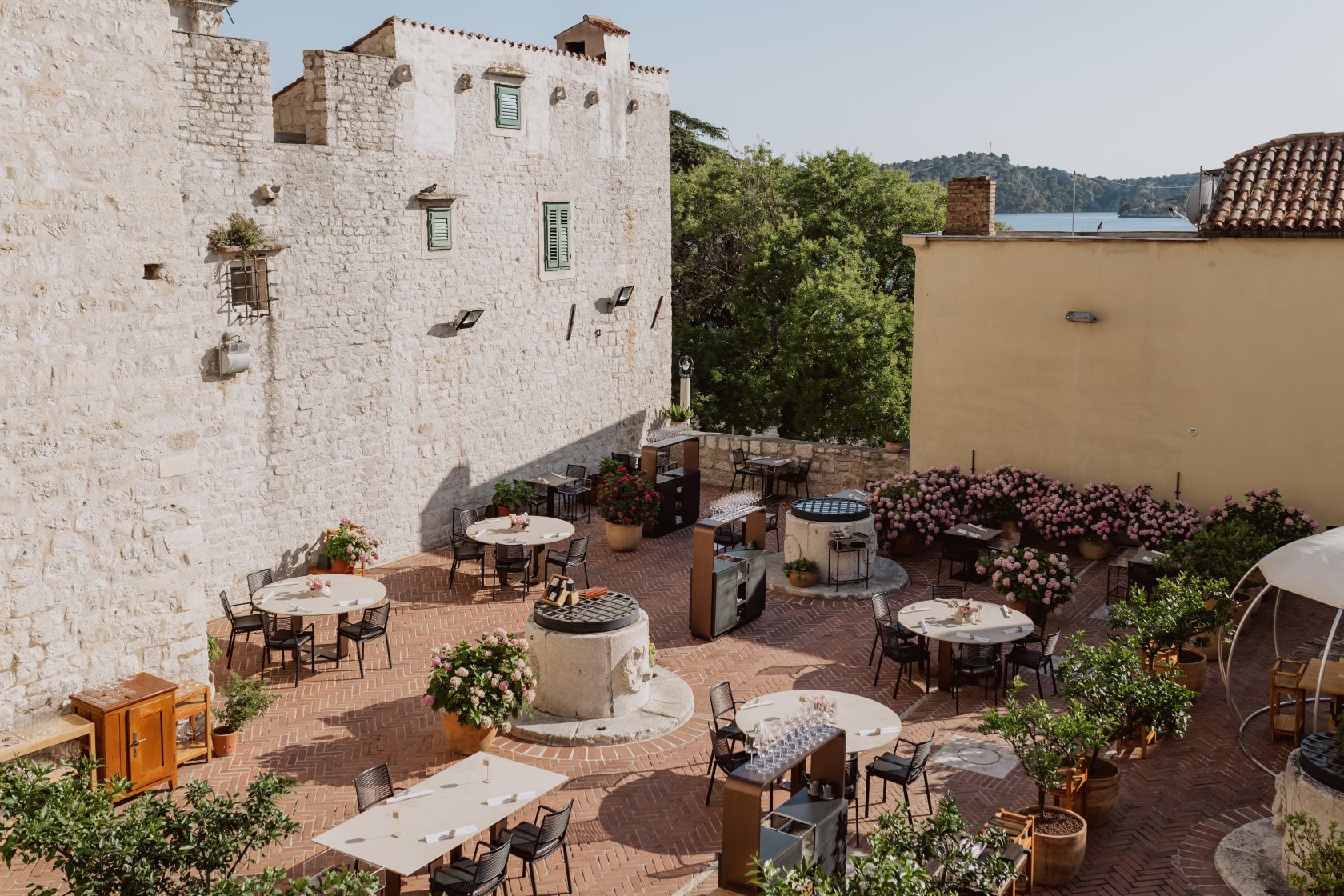
Tucked away in the immediate vicinity of the UNESCO-listed pearl, St. James's Cathedral, lies the Four Wells Square. What at first glance appears to be a large terrace paved with herringbone-patterned bricks and four stone wellheads is actually the roof of a massive 15th-century city cistern.
During the late Middle Ages, when the cathedral was being built, Šibenik faced severe shortages of drinking water. The main cistern in the cathedral square was insufficient for the citizens' needs. Consequently, the Šibenik municipality purchased land from the Dominicans right next to the city walls and, in 1446, signed a contract with the renowned cistern builder, Master Jakov Correr from Apulia, whom they lured away from the people of Korčula—who were building the cathedral—with favorable terms. This proves just how high a priority securing drinking water was at that time. The main supervision of this demanding structure, which had to withstand immense water pressure, was entrusted to none other than the great Juraj Dalmatinac. Since Jakov Correr was not a stonemason, the decoration of the wellheads was left to masters Marko Petrov and Juraj Mihajlov. Carved onto them are the figures of the winged lion of St. Mark—the patron saint of Venice, St. Michael—the patron saint of Šibenik, and the coats of arms of the Šibenik counts Valaresso and Marcello.
If you walk across this square and look closely at the details, you will notice stone slabs between the rows of bricks with slight inclines that directed every drop of rainwater toward stone drains. Only after the water passed underneath, through a filter of pebbles, gravel, and sand, would it reach the bottom of the cistern, crystal clear and purified, ready to be drawn from one of the four ornate wellheads. The carved slits around the wells, designed so that any water accidentally spilled while drawing would flow back into the darkness of the cistern, testify to how rare and precious water was at the time—the entire system was based on conserving the liquid that means life.
The bottom of the cistern is below sea level, and its capacity was 28,000 barrels of water. Since that number may not mean much to a modern person, we can visualize it as two Olympic-sized swimming pools, 89,000 large 50-liter barrels lined up side by side, 22 million two-deciliter glasses of water, or the volume of 726 firefighting aircraft. Given that about five to six thousand people lived within the city walls in the mid-15th century, this cistern provided every household with thousands of life-saving liters, guaranteeing survival during months of summer drought and potential enemy sieges. However, this was only possible if it rained—for which one could only pray to God. Although insufficient despite its size, the cistern remained in use until 1879, when water from the Krka River first flowed into Šibenik thanks to the construction of a modern water supply system.
Today, this square serves as a summer terrace for the prestigious Michelin-starred restaurant Pelegrini, located in the nearby Pelegrini-Tambača Palace. It was in this very house that the famous Šibenik family Tambača once lived; they were landowners and guardians of the Dalmatian wine heritage. In their taverns, they nurtured the pride of this region—the mythical Šibenik Maraština, whose grapes were dried right here on the Four Wells Square. Today, chef Rudolf Štefan continues that tradition in a completely different way, transforming local ingredients and indigenous wines into top-tier gastronomic art within this historic setting.
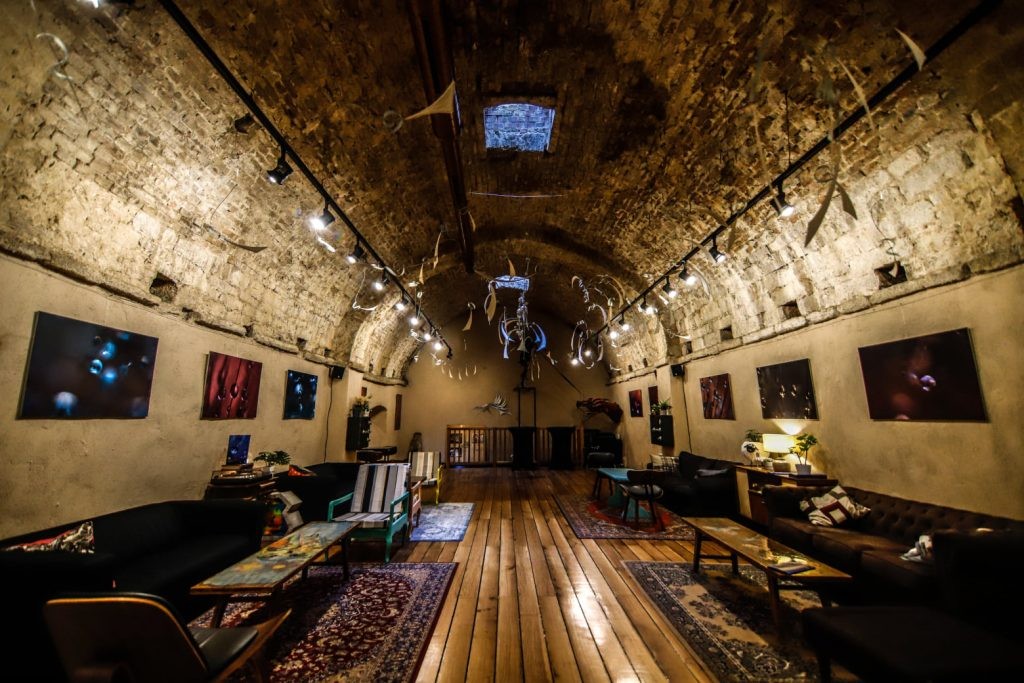
The interior of the cistern, once dark, cold, and filled with water, is now home to the iconic Azimut club, a driving force of the contemporary Šibenik cultural scene. Through the work of the Kolektiv4B association, numerous concerts, lectures, exhibitions, festivals, and quiz nights, Azimut has breathed new life into this space—now an inexhaustible cistern of creativity.