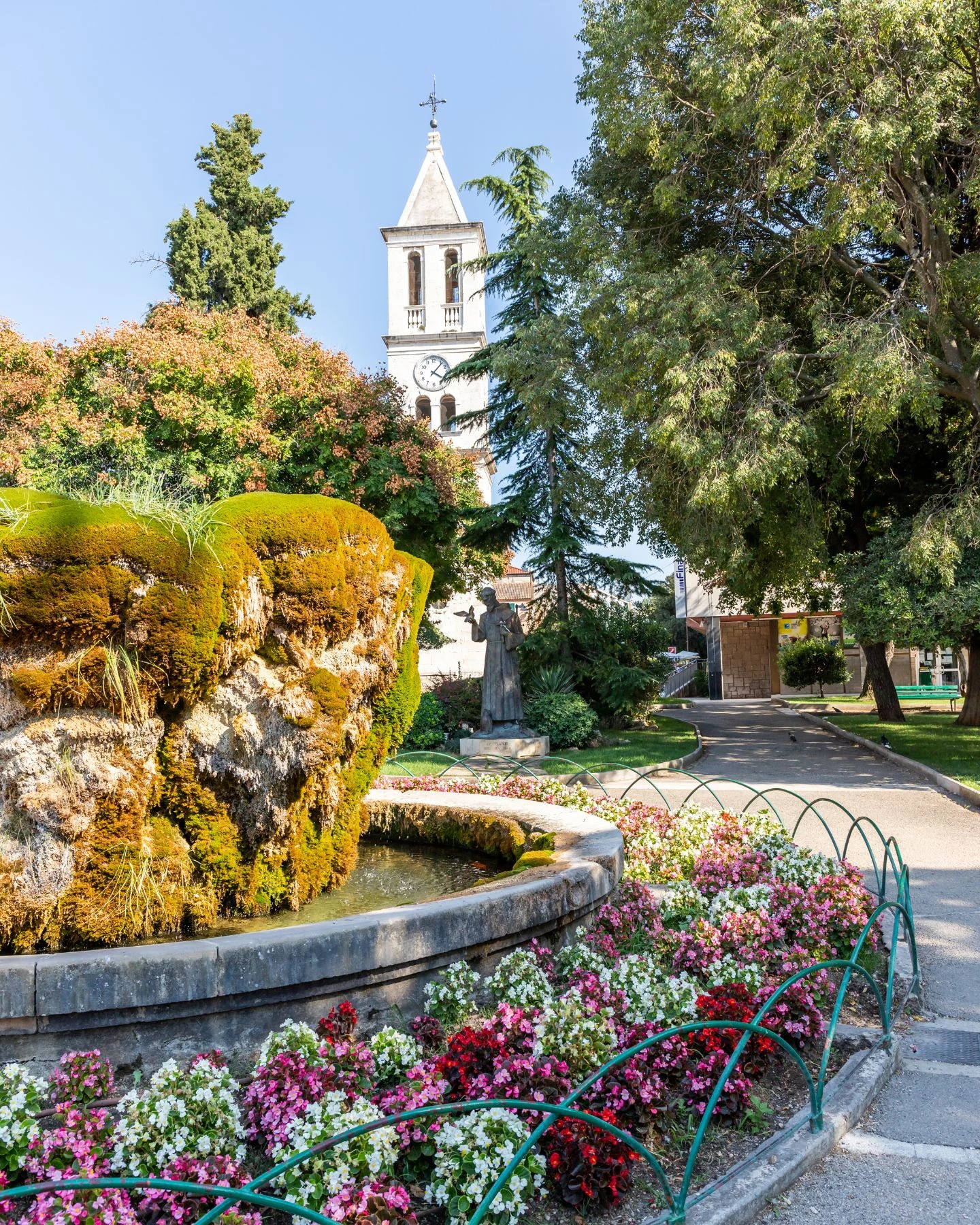
The fountain in front of the Church of Our Lady Outside the City hides a rare global phenomenon—a living rock that is constantly growing, while in the historic center stands Šimun’s Mulberry, the oldest tree in the city, which preserves stories of maritime tradition and survival through wartime destruction.
LIVING TRAVERTINE FOUNTAIN
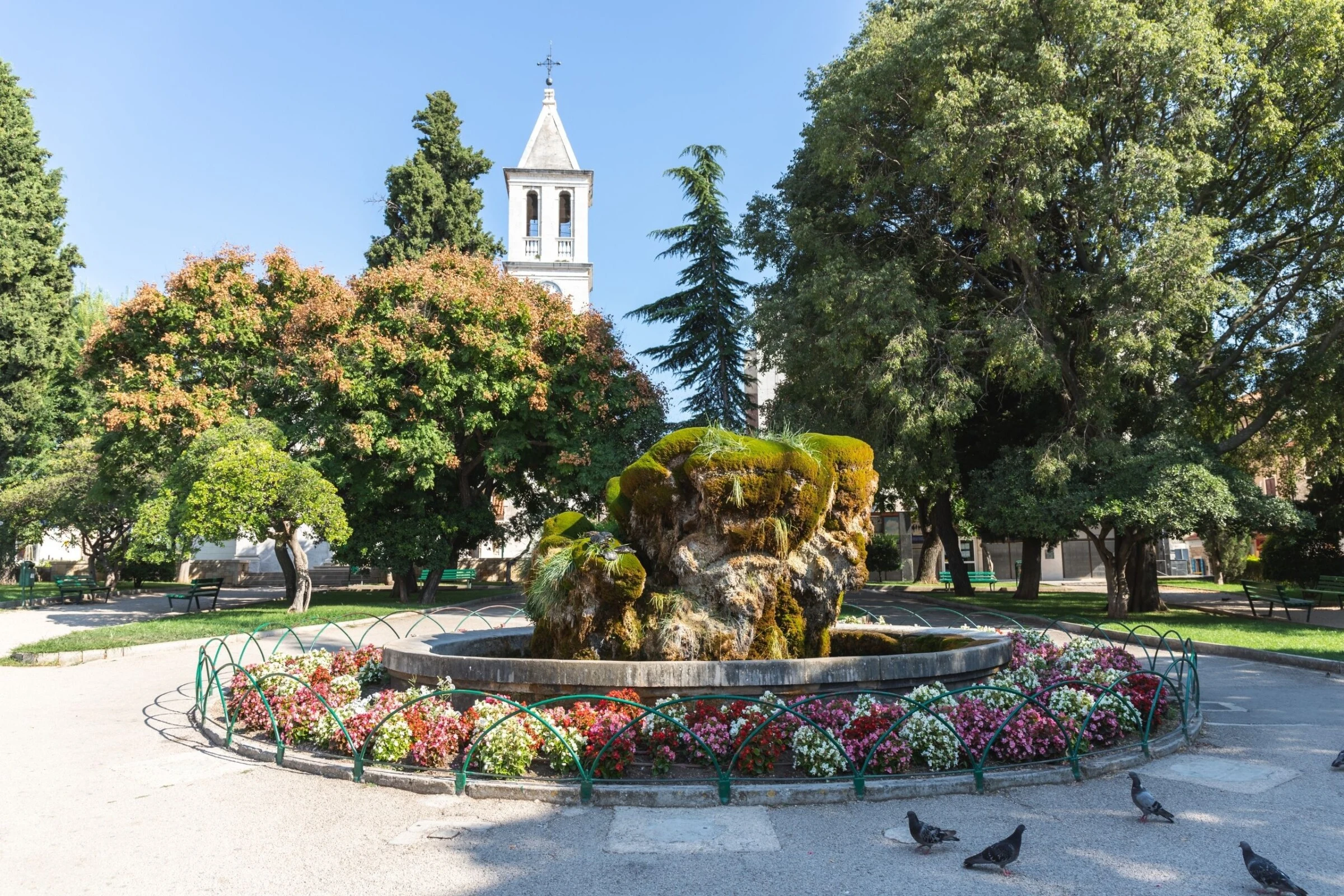
This fountain is a great rarity, even on a global scale. In the 1920s, when the former cemetery space in front of the Church of Our Lady Outside the City was being converted into a park, a piece of travertine was brought from Skradinski Buk and placed in the center of the fountain. Since then, thanks to complex physical, chemical, and biological processes, it has been constantly
growing. Travertine, a rock formed by the deposition of calcium carbonate dissolved in water, was often used as a building material in this region, but today it is strictly protected, and breaking off pieces is prohibited. Nevertheless, this natural phenomenon from Krka National Park continues to live and grow in the very heart of Šibenik.
Beyond being an attraction, it is also an indicator of environmental purity, as travertine can only grow under very specific conditions in unpolluted water. Along with algae and bacteria, aquatic mosses are of exceptional importance to travertine, and the appearance of the travertine itself depends on the type of moss.
Over time, the fountain gained more inhabitants—red-eared and yellow-bellied sliders (lat. Trachemys scripta) and freshwater fish, most notably goldfish (lat. Carassius auratus). Some of these were once pets that their owners could no longer keep in aquariums, and as invasive species, they must not be released into
the wild. Thus, the fountain has also become a kind of animal sanctuary.
ŠIMUN’S MULBERRY
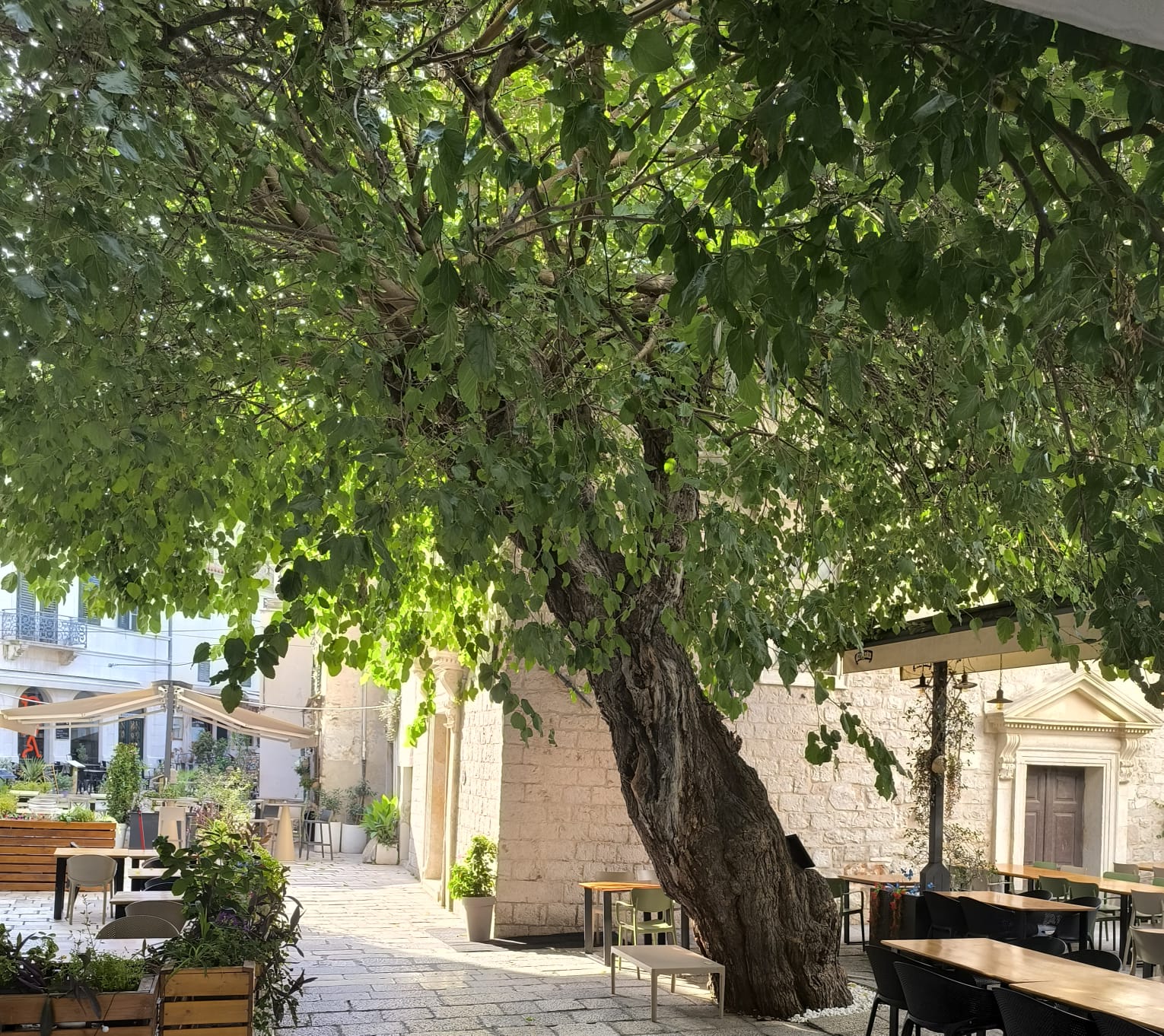
The white mulberry tree (lat. Morus alba) is considered the oldest in Šibenik’s historic center. The age of this mulberry is estimated at 150 years, and its circumference exceeds 300 cm. It is known as "Šimun’s Mulberry" after a legend which says that a sailor named Šimun, a member of the Brotherhood of St. Nicholas—composed of sailors and shipbuilders—brought its seed from distant China and planted it next to the Church of St. Nicholas as an act of penance. Although the story of the votive tree places the planting of this mulberry in the 17th century, it is actually the only surviving tree from a row of mulberry trees in the former Fruit Square, which was destroyed in the Allied bombing on December 13, 1943.
Mulberry trees were once a favorite source of shade throughout Dalmatia, where they were intentionally planted in rows in town squares and along coastal promenades, making these old trees a part of our natural heritage.