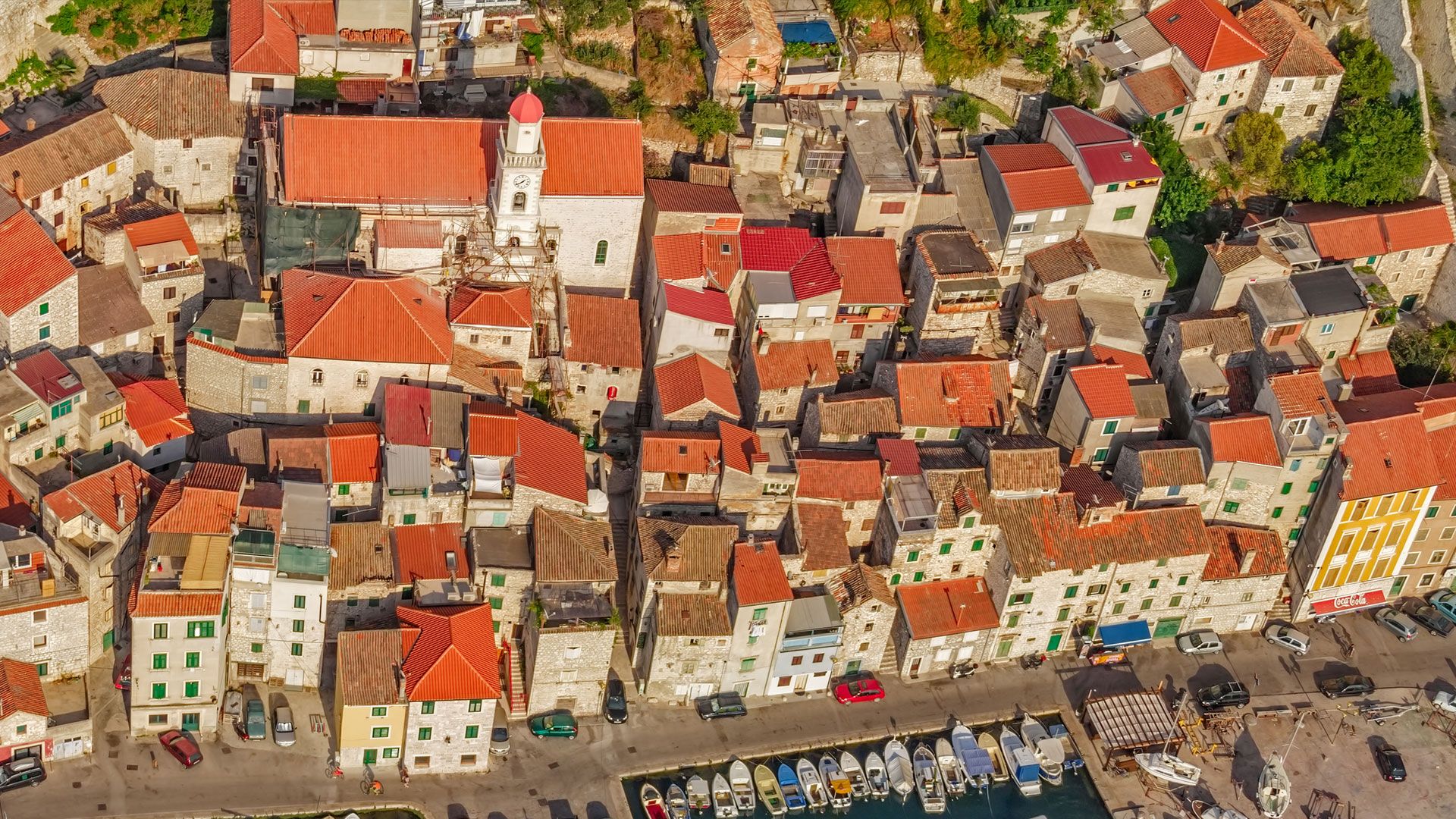
Although it has only about 40,000 inhabitants today, at the height of its golden age in the first half of the 17th century, Šibenik had 10,000 to 12,000 residents, making it the largest city in Dalmatia. For this reason, Šibenik's historic center is larger than those of other, much older, Dalmatian cities.
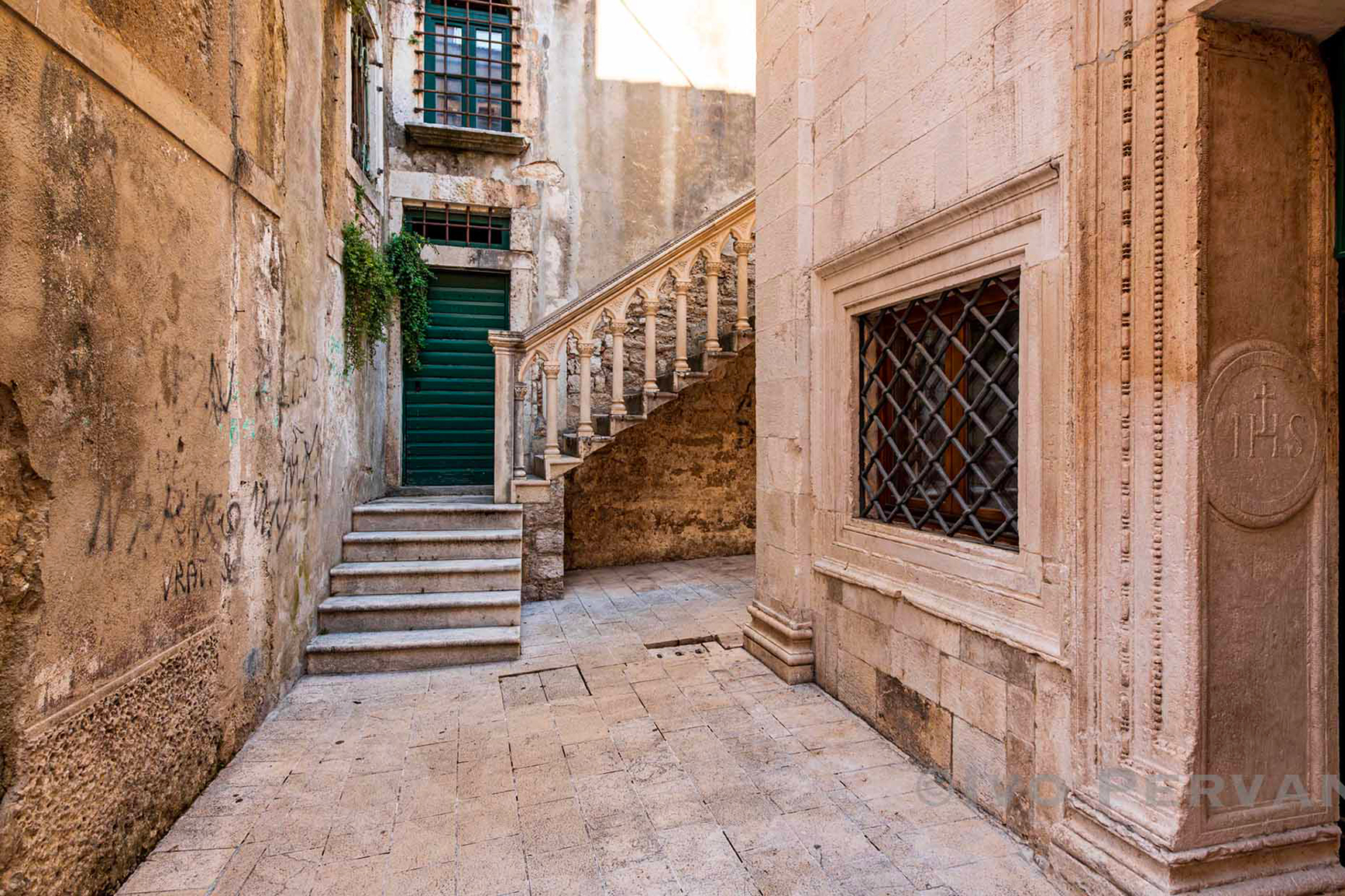
Spreading out beneath St. Michael's Fortress, the oldest of Šibenik's four fortresses, Gorica is up, while Dolac is down, and the flattest part, once surrounded by defensive walls, is known as Grad (the City). The stone heart of the city hides over 20 sacred buildings, some of which are still in active use today. Others have been repurposed into galleries, museums, and even residential properties. You can climb up and down Šibenik's 2,800 stairs because a good part of the city was built on a slope beneath a cliff, which is why it is said that it looks like an amphitheater from the sea.
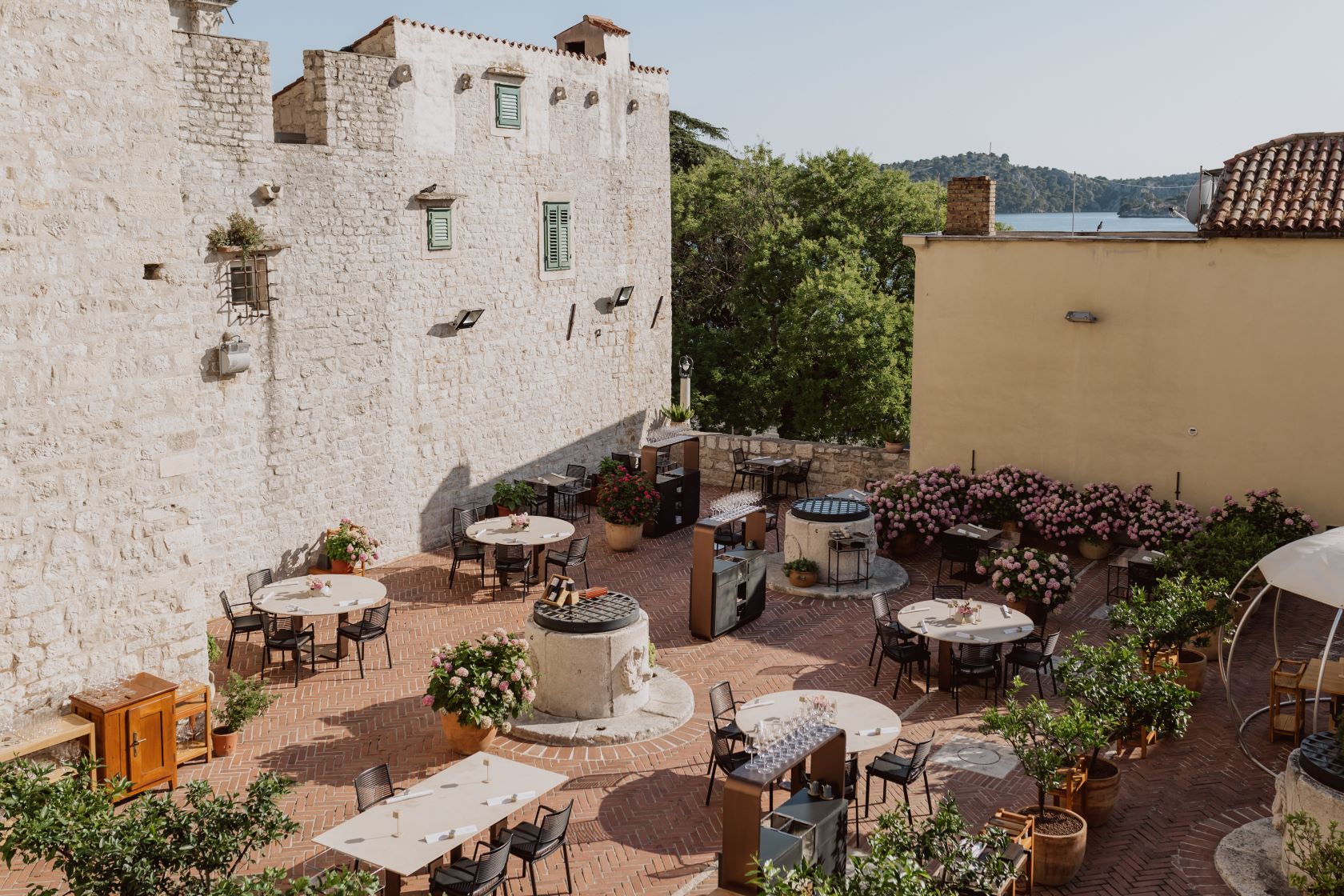
Republic of Croatia Square, bordered by the Cathedral of St. James and the Great and Small Loggia, has been the center of Šibenik's social life since the Middle Ages. In the immediate vicinity of the cathedral are two palaces: the Bishop's Palace, which leans against the cathedral itself and serves as the seat of the Diocese of Šibenik, and the Prince's Palace, which was once the seat of the city prince and is now home to the Šibenik City Museum. On the west side of the cathedral lies the Square of the Four Wells, once the largest public cistern in Šibenik, the interior of which can also be visited.
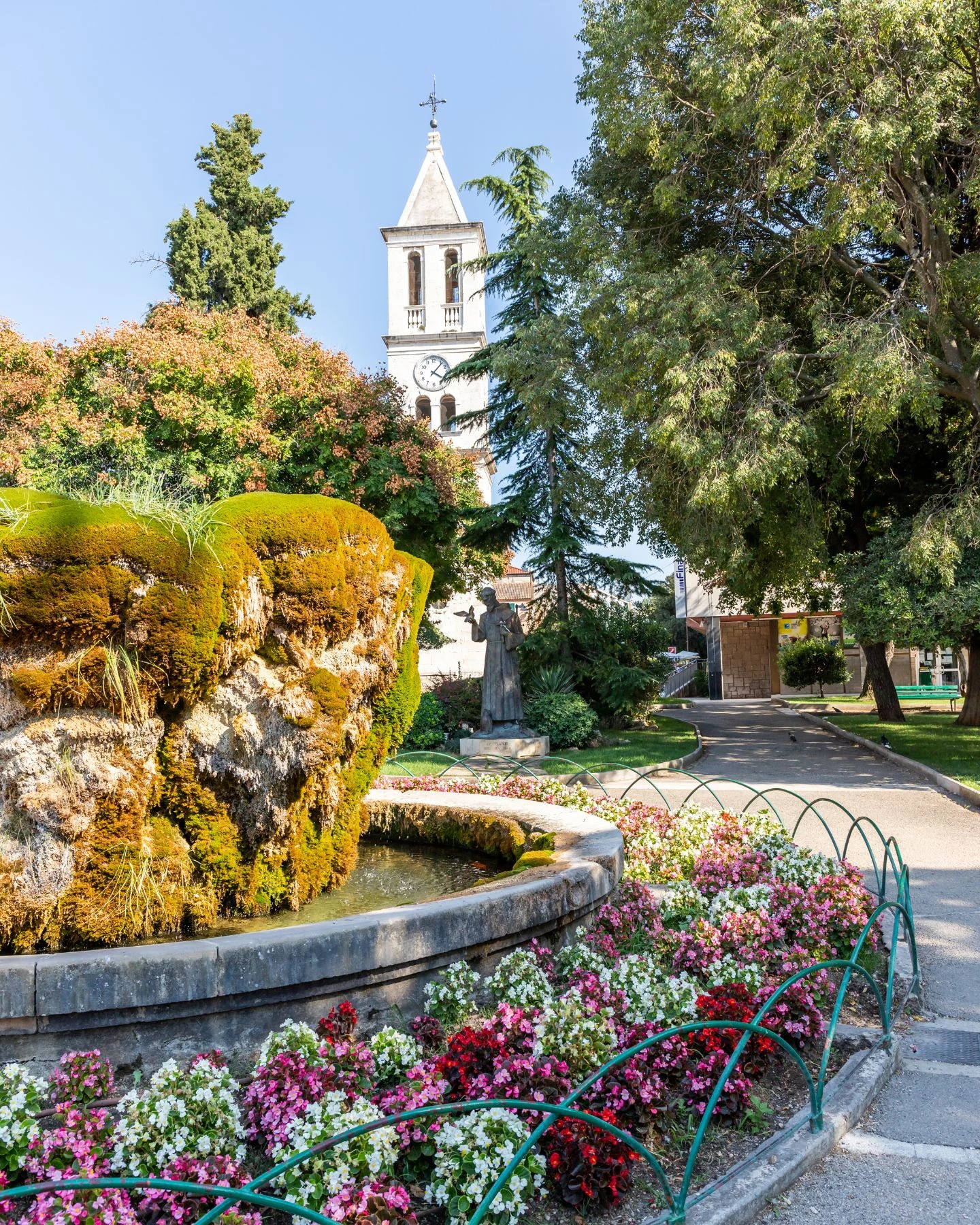
There are two green oases you can enjoy: Robert Visiani Park, which runs along the remains of the city walls and connects Poljana to the waterfront, and the Medieval Garden of St. Lawrence, hidden among the steep streets of Gorica. A third green oasis is nearby; if you cross the road to the east, you will find Lujo Marun Park in front of the Church of Our Lady Outside the City, whose name proves that you are now truly outside the former city walls.