"If a pilgrim is half a tourist, then a tourist is half a pilgrim" is a well-known saying that highlights the intertwining of these two types of travelers who, despite different motivations, step out of their daily routines in search of a life-changing experience.
Pilgrimages to St. James in Santiago de Compostela date back to the 9th century, with the first pilgrims from the territory of present-day Croatia recorded in 1203, when the Camino became popular across Europe. In Šibenik itself, the Confraternity of St. James of Compostela was founded in 1414. Members were required to undertake the Camino or, if they were unable to do so for any reason, to make a contribution to the Church of St. Gregory, which served as the Confraternity's headquarters. Even today, the carved coat of arms of the Confraternity of St. James, featuring the symbols of Camino pilgrims—the scallop shell and two crossed pilgrim staffs—is visible above the window of the church. The frequency of pilgrimages from Šibenik to Compostela, compared to other popular pilgrimage sites, stems from the special tradition of venerating St. James in Šibenik, where he is the patron saint of the cathedral itself.
In 2019, Croatia, under the name Camino Croatia, began the restoration of its medieval pilgrimage routes toward Santiago de Compostela. The project is led by the Confraternity of St. James, a non-profit organization that continues and revives the tradition of all Croatian confraternities of the same name from the past and serves as the official Croatian representative to the Camino Europa federation. On its official website, the Confraternity states: "Camino Croatia is a project that promotes shared European heritage and identity, supports the sustainable development of local communities, encourages healthy lifestyle habits with a uniquely effective anti-stress effect, brings together people from different walks of life, and helps people find inner peace."
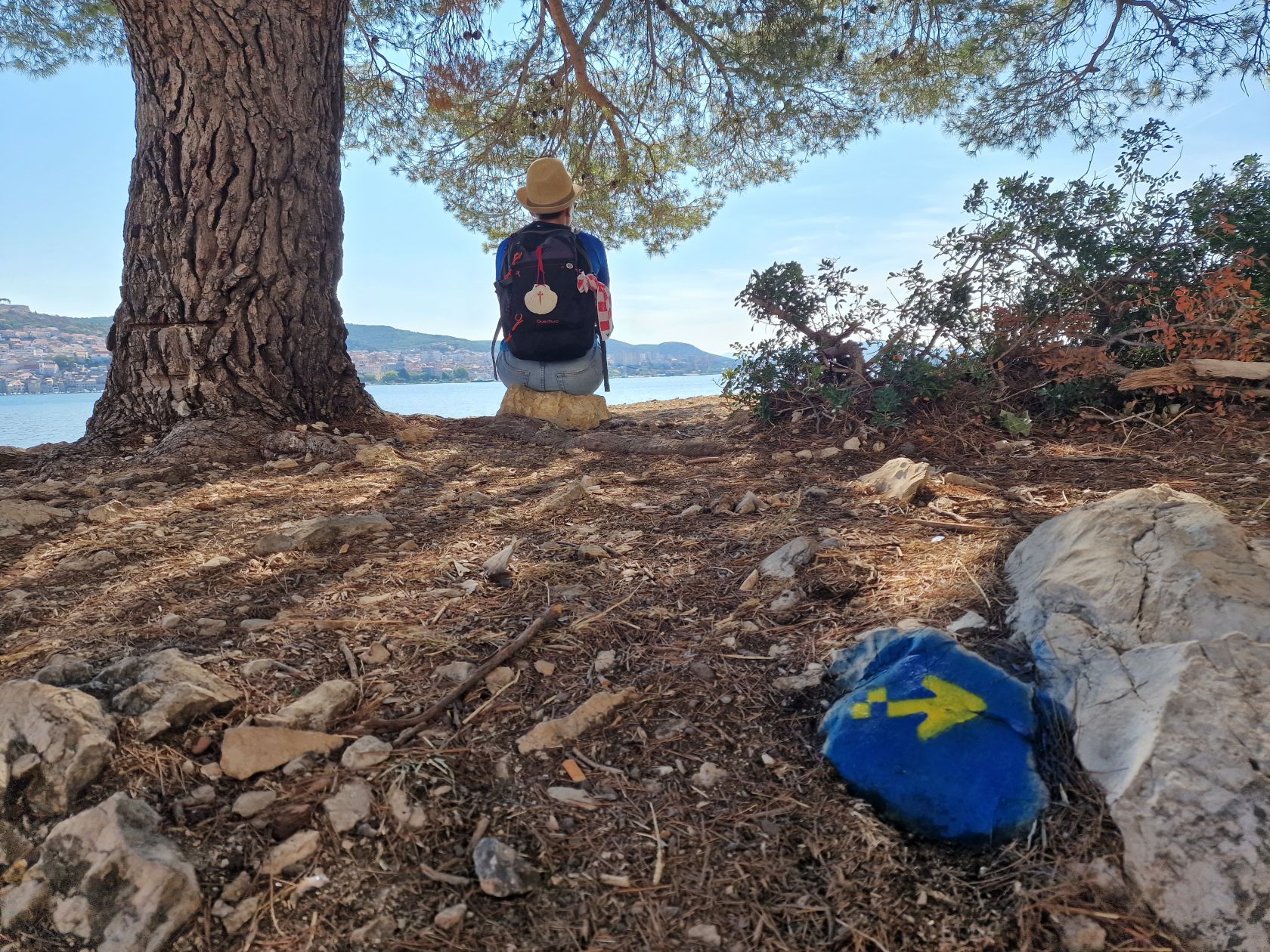
To date, over 3,000 km of Camino hiking trails have been marked across Croatia, and work continues actively on marking new ones. Camino Šibenik was established in 2022, making Šibenik a member of the European Federation of St. James Way, which strengthens the city's connection to European Camino heritage. The route is excellently marked and spans 108 kilometers, much of which can be walked right along the coastline or with views of the sea. Camino Šibenik begins in Marina, which, although part of the neighboring Split-Dalmatia County, has historically been part of the Diocese of Šibenik, and ends in Pirovac. Other stops on the route include: Rogoznica, Primošten, Grebaštica, Vrpolje, Šibenik, Jadrija, Vodice, and Tribunj. Stamps for Grebaštica, Vrpolje, Šibenik, and Jadrija for the pilgrim passport and the Camino Šibenik certificate can be obtained at the Tourist Information Center in Šibenik and the Parish Office of St. James Cathedral, while the pilgrim passport can be purchased at the Civitas Sacra Interpretation Center and the aforementioned parish office.
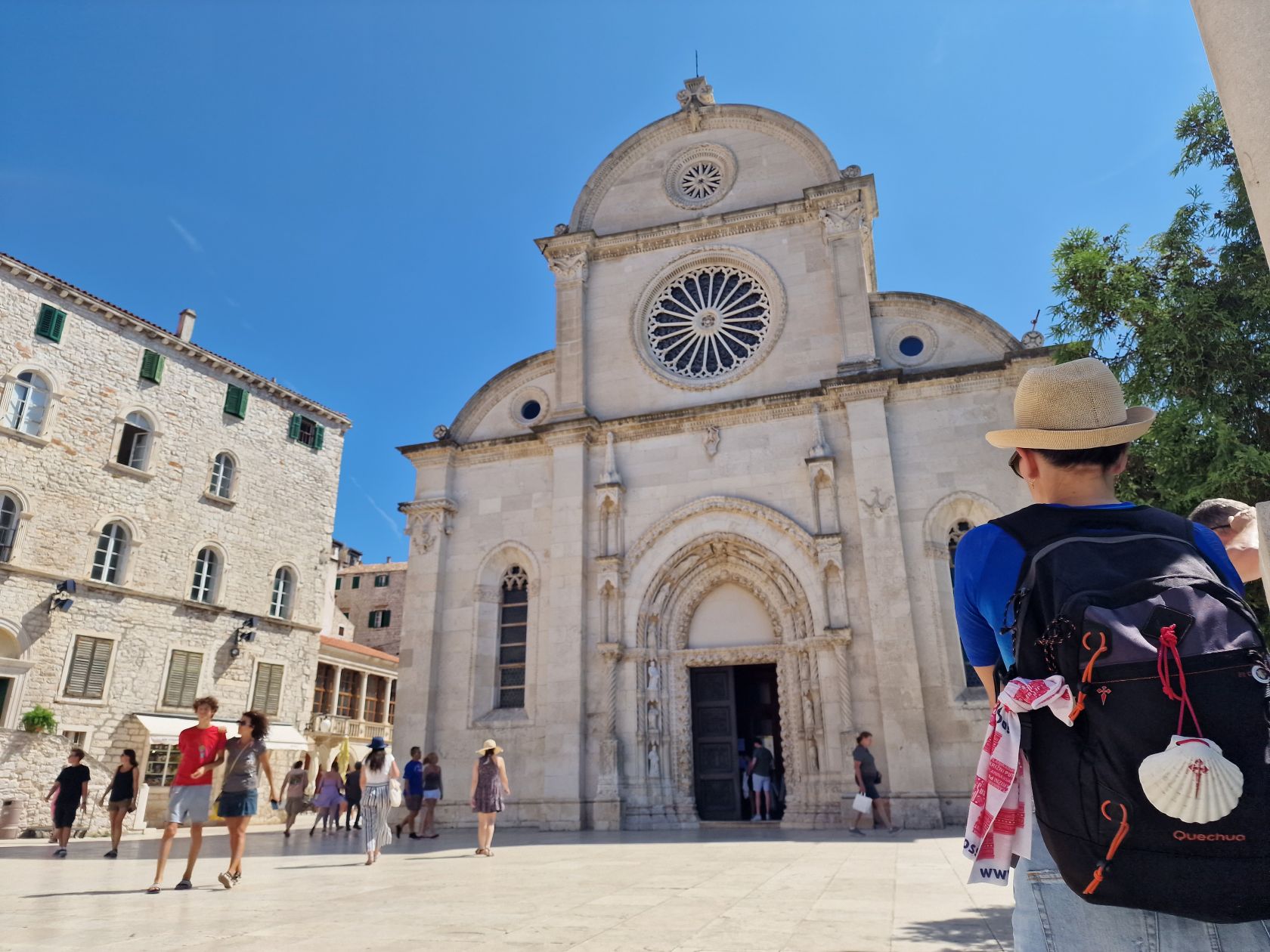
Due to the mild climate and beauty of this part of the Dalmatian coast, Camino Šibenik is considered one of the most beautiful routes. Exactly halfway through, the route reaches its spiritual peak in Šibenik, where the UNESCO gem awaits you—the Cathedral of St. James, the saint to whom the Camino is dedicated.