

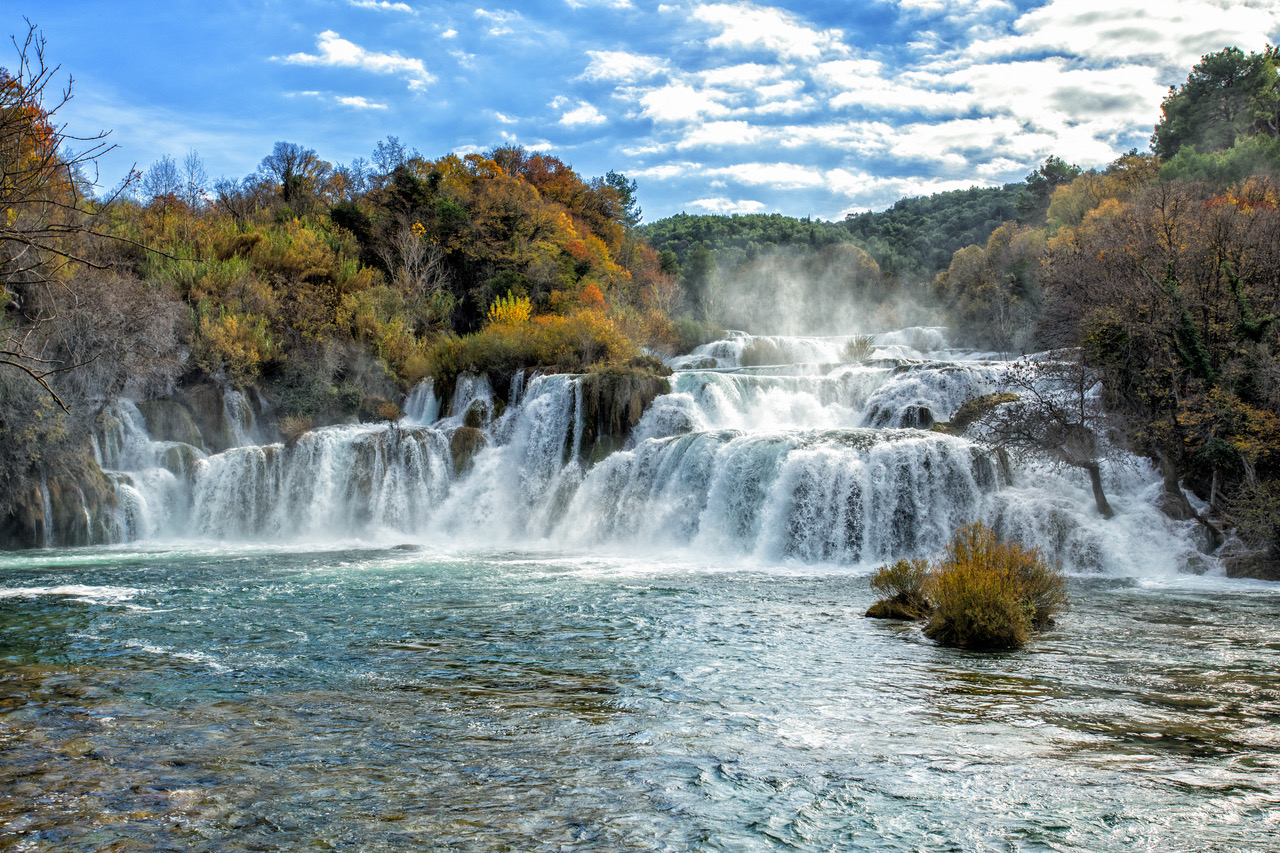
Following the river's course, seven magnificent waterfalls reveal themselves, each with its own unique character, from the first, Bilušića buk, through Brljan, Manojlovački slap, Rošnjak, Miljacka slap, and Roški slap, all the way to Skradinski buk. Skradinski buk is the most famous and most visited of the waterfalls, and it is also the longest travertine barrier in Europe.
Nestled in the embrace of the Krka are two spiritual centers: the small island of Visovac in the middle of Visovac Lake with its Franciscan monastery, and the Orthodox Krka Monastery near the site where the highest waterfall, Manojlovac, cascades down. Along the very edges of the Krka canyon lie the remains of eight medieval fortresses: Ključica, Kamičak, Bogočin, Nečven, Trošenj, Rogovo, Uzdah-kula, and Čučevo. In the upper reaches of the Krka, you can visit the remains of Burnum, a Roman military camp from the 1st century.
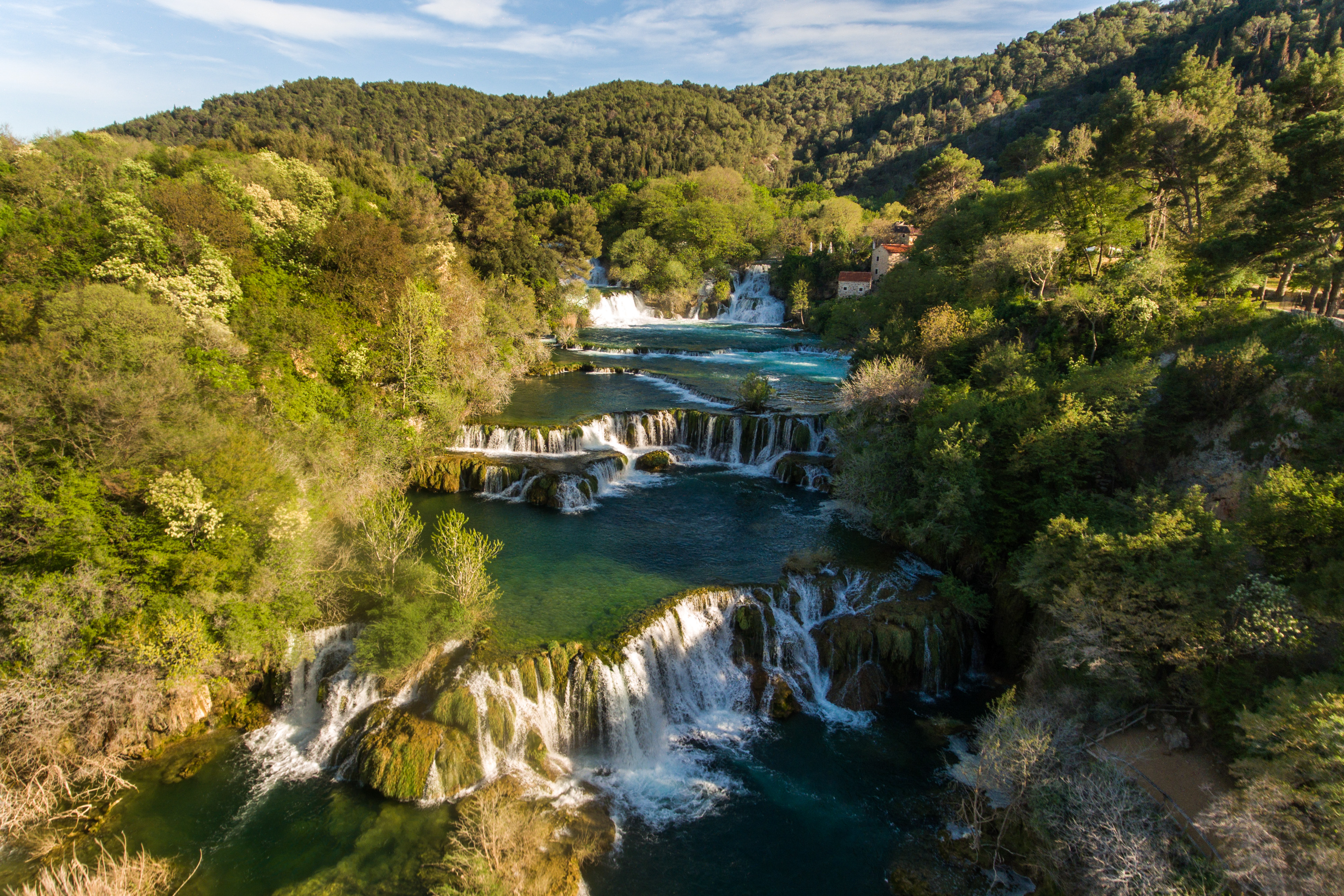
The inseparable connection between man and the Krka is best evidenced by the old watermills and the remains of one of the oldest hydroelectric power plants in the world, which in 1895 used polyphase alternating current to light up the city of Šibenik. Traditional crafts are presented in the mills at Skradinski buk and Roški slap, where items from the ethnographic collection are also on display. In several visitor centers throughout the Park, you can learn more about the rich cultural, historical, industrial, and, of course, natural heritage of the Krka.
Krka National Park is home to incredible biodiversity due to its large number of different habitats. Its rich flora and fauna include more than a thousand plant species, numerous types of birds, fish, and bats, as well as a significant number of endangered and endemic species, especially those that inhabit the underground karst world.
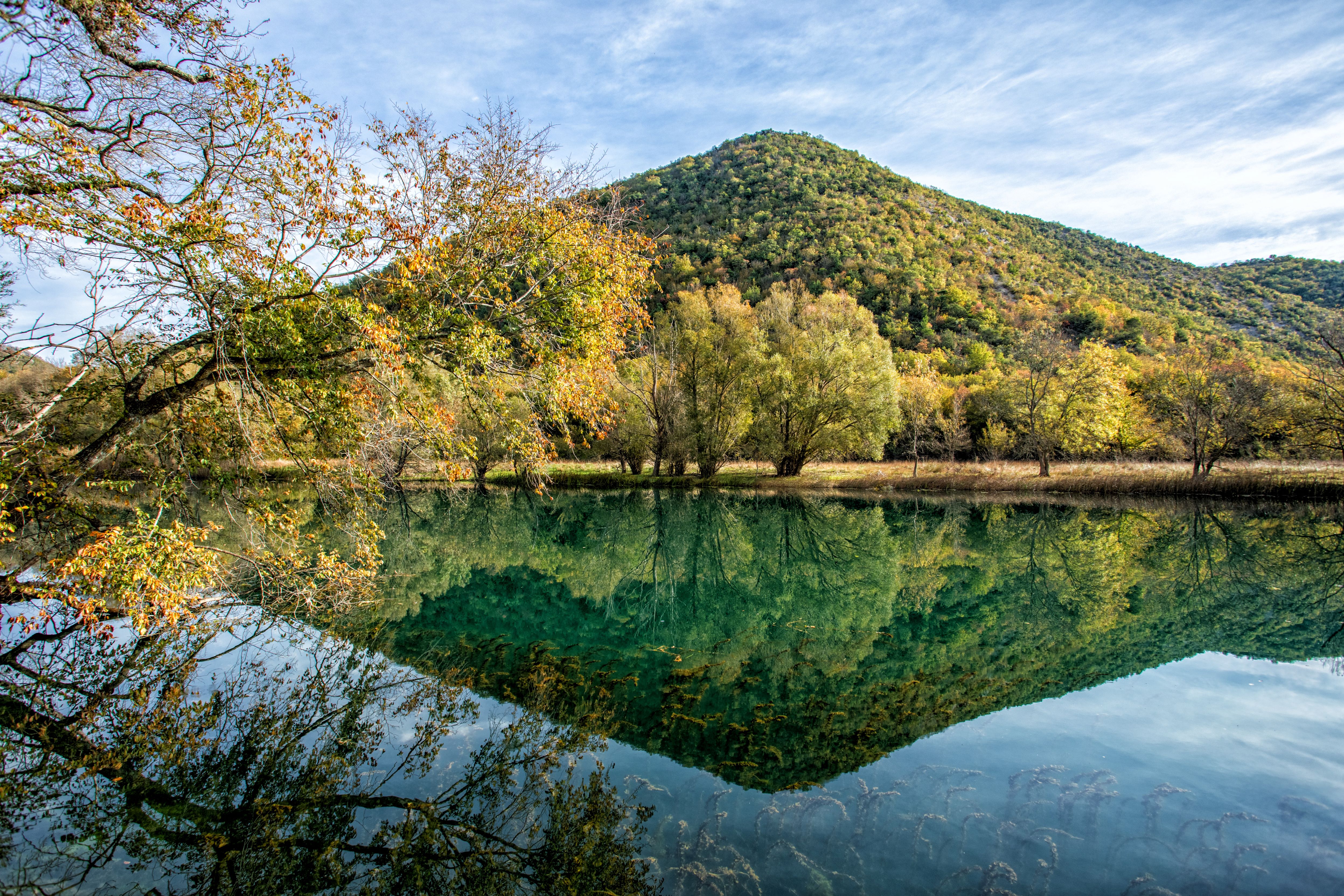
You can explore the Park via kilometers of educational hiking and cycling trails, as well as well-maintained viewpoints that offer spectacular views of the canyon. You can access the Park through four main entrances: Lozovac, Skradin, Roški slap/Laškovica, and Burnum/Puljane. Regardless of which entrance you choose—whether in the upper or lower reaches—you will be amazed by the magic of Croatia's most beautiful karst river.
The nature of Krka National Park changes its face throughout the seasons, and the rhythm of the Park itself adjusts accordingly. To ensure the best experience and stay informed about current opening hours and ticket prices, which vary depending on the time of year, we recommend checking the latest information on the official Krka National Park website. We also suggest extending your stay in the Šibenik region to visit Kornati National Park, which, although also an embodiment of karst, is quite different from Krka.


