

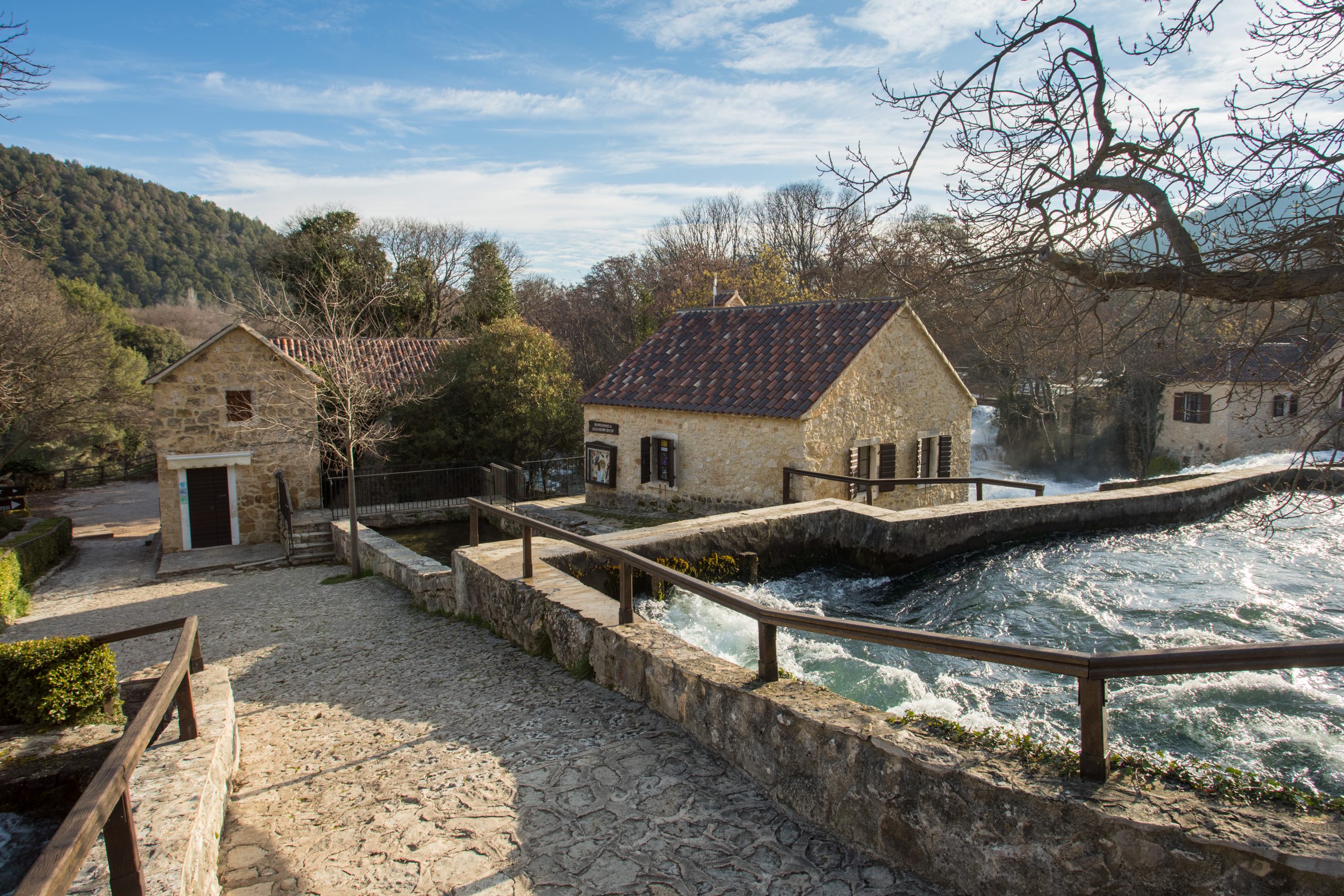
This complex of authentic, preserved 19th-century watermills and stone houses has been designated an ethnological and ethnographic monument, vividly showcasing the economy and folk traditions of the Dalmatian hinterland.
The village is a genuine, indigenous representation of the old rural region, with houses built from solid local stone and wood, perfectly integrated into the river landscape. The watermill system harnesses the natural power of the Krka River to turn heavy millstones, and the sound of grain being ground, mixed with the constant roar of the waterfalls, creates a unique, soothing soundscape.
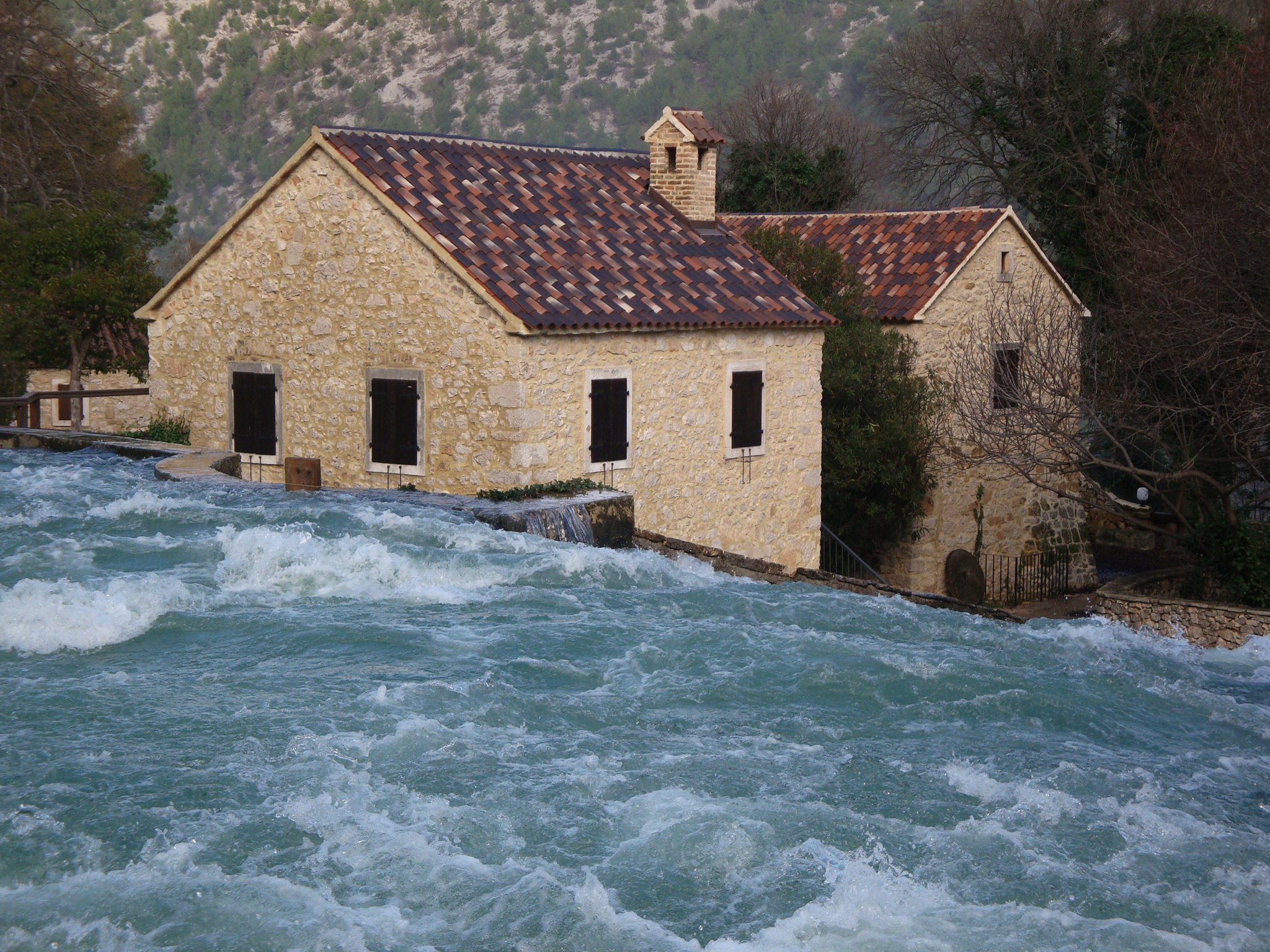
The interiors have been transformed into educational exhibition spaces, where visitors can walk through an authentic "old kitchen," bedrooms, and rooms featuring historical tools and folk costumes. The village hosts faithful presentations of old crafts and ways of life under the title "The Story of Water," including grain milling, fulling and washing cloth, as well as blacksmithing and weaving demonstrations. The most scenic way to reach the ethno village is by tourist boat from Skradin, and the restored houses also feature authentic souvenir shops with local products.


